House Study Committee on School Accountability Metrics & Educator Workforce Holds First Meeting
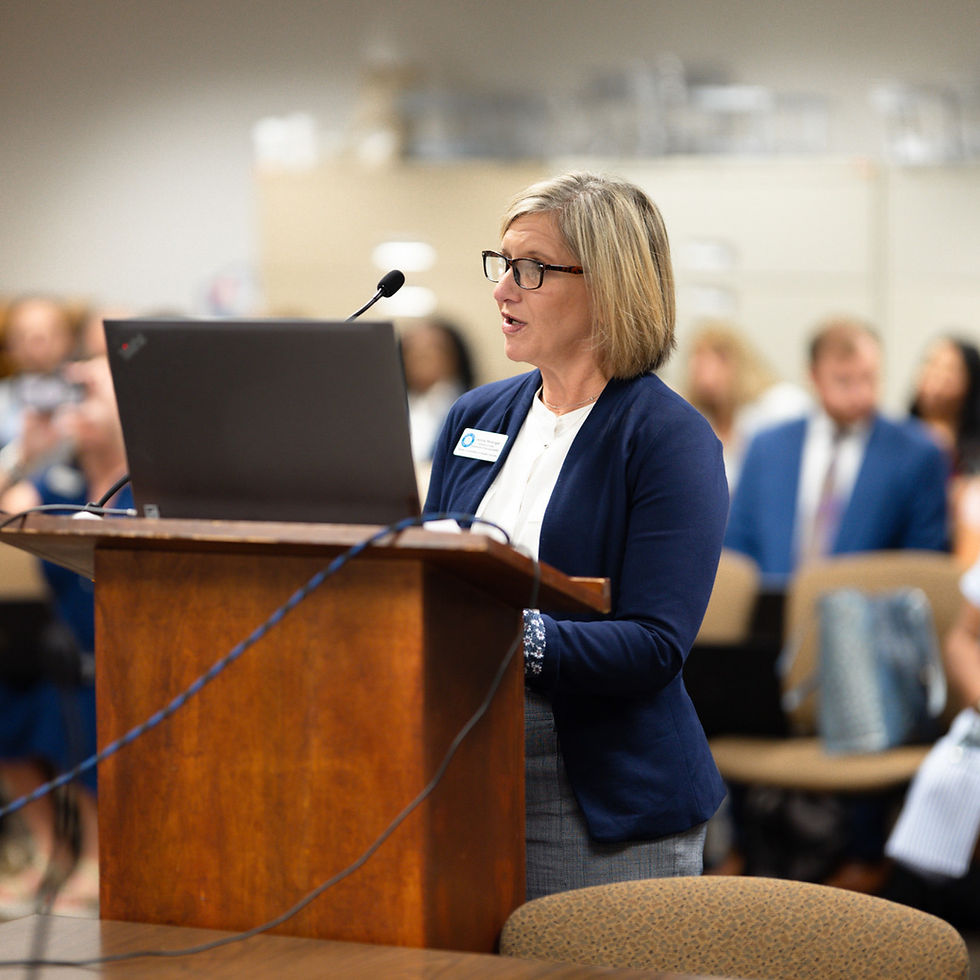
The House Blue-Ribbon Study Committee on Education Performance Metrics and Workforce Stability held its first meeting Aug. 5 in Perry, Georgia. The study committee's mission is to "evaluate Georgia’s education evaluation measures to strengthen accountability, improve student success, and strengthen teacher recruitment and retention."
Committee Members and Expected Focus


The committee is chaired by Rep. Bethany Ballard (R-Warner Robins) and has the following members:
Rep. Omari Crawford (D-Decatur)
Rep. Sandy Donatucci (R-Buford)
Rep. Leesa Hagan (R-Lyons)
Rep. Scott Hilton (R-Peachtree Corners)
Rep. Karen Lupton (D-Chamblee)
Rep. Chuck Martin (R-Alpharetta)
Rep. Phil Olaleye (D-Atlanta)
Rep. Carmen Rice (R-Columbus)
Rep. Deborah Silcox (R-Sandy Springs)
PAGE expects the committee to have a dual focus on studying possible revisions to the College and Career Ready Performance Index (CCRPI) while also examining ways to further strengthen the educator workforce
Opening Remarks


Houston County Superintendent Richard Rogers began the presentations by sharing statistics from his district, drawing attention to the district's high student diversity and above-average academic performance. He reiterated his support for accountability metrics but stressed the need to ensure they measure the right criteria. Rogers also requested that private schools participating in state voucher programs be held to the same accountability requirements as public schools.
CCRPI History and Background

Steven Hornyak, chief innovation officer for Houston County Schools, provided a brief history of relevant state and federal school accountability laws and assessments before shifting into an explanation of the CCRPI component scores, which are as follows:
Content Mastery (based on assessment test scores)
Progress (measures growth in math and ELA compared to similar students)
Closing Gaps (measures if certain student groups are meeting annual improvement targets)
Readiness (measures, college and career readiness, literacy, attendance, and items beyond core curriculum)
Graduation Rate (only used for high schools)
Several committee members expressed concern that multiple changes to the CCRPI in recent years have made it difficult to accurately measure school district growth over time.
Closing Gaps Scores
Specific focus was given to Closing Gaps and its volatility compared to the other components. Elgin Mayfield, assistant superintendent of teaching and learning for Houston County Schools, highlighted two district schools to serve as examples of how Closing Gaps scores can change greatly between years and also showed how this volatility is common across the state.

Mayfield claimed the volatility was due to the Closing Gaps score being calculated from a baseline score that changes each year. Small numbers of students in select subgroups and the ability of a single student to be included in multiple subgroups can also contribute to the component's volatility. Mayfield recommended that Closing Gaps scores instead be calculated using a three-year rolling average.
Other Presentations

Middle Georgia RESA Executive Director Juli Alligood spoke to the effects of CCRPI on teachers and stated that many feel frustrated by its complexity. The superintendents of Crawford and Peach County schools also briefly spoke and echoed concerns about the volatility of the Closing Gaps score in small districts. It was requested that a larger percentage of students be allowed to take the Georgia Alternate Assessment.