PAGE Presents Data Strongly Supporting Veteran Teacher Salary Steps to House Study Committee
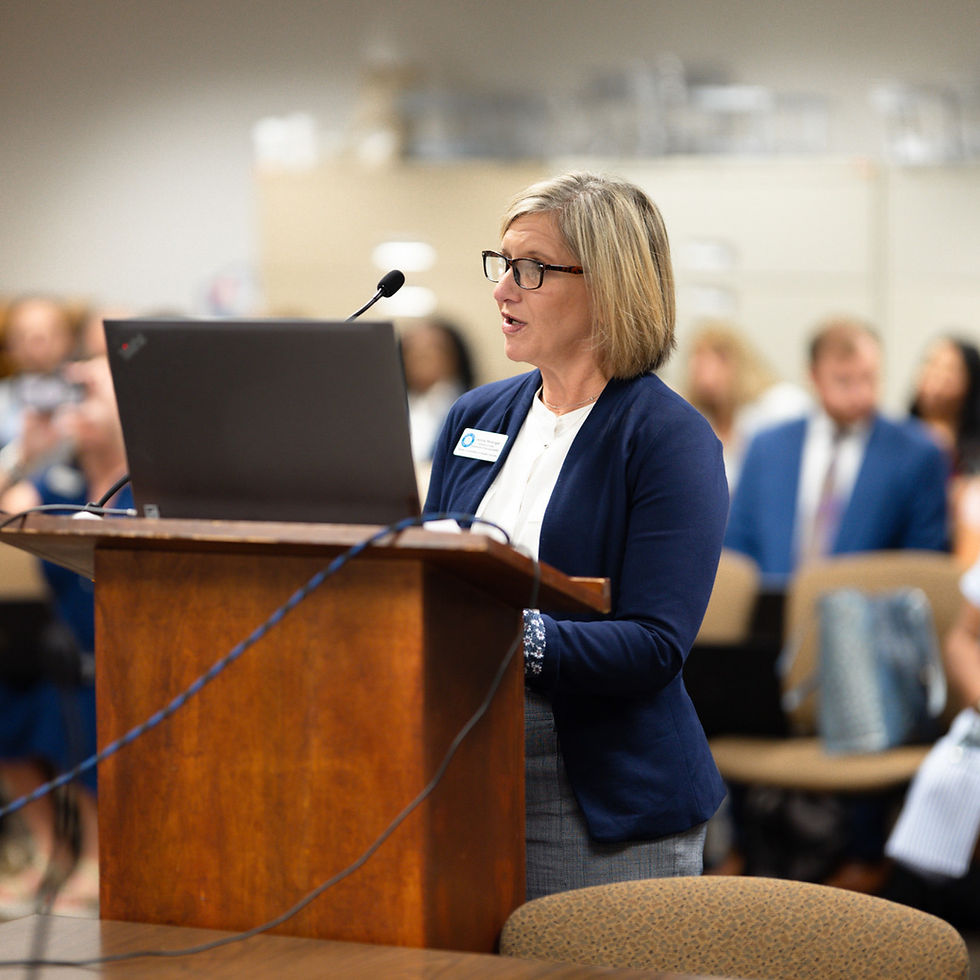
The House Blue-Ribbon Study Committee on Education Performance Metrics and Workforce Stability held its third meeting Sept. 9 in Columbus, Ga. PAGE presented on the need to add salary steps for veteran educators.
The committee is chaired by Rep. Bethany Ballard (R-Warner Robins) and has a dual focus on studying Georgia's state accountability assessment, the College and Career Ready Performance Index (CCRPI), and strengthening the educator workforce.
PAGE Highlights Importance of Salary Steps for
Veteran Educators

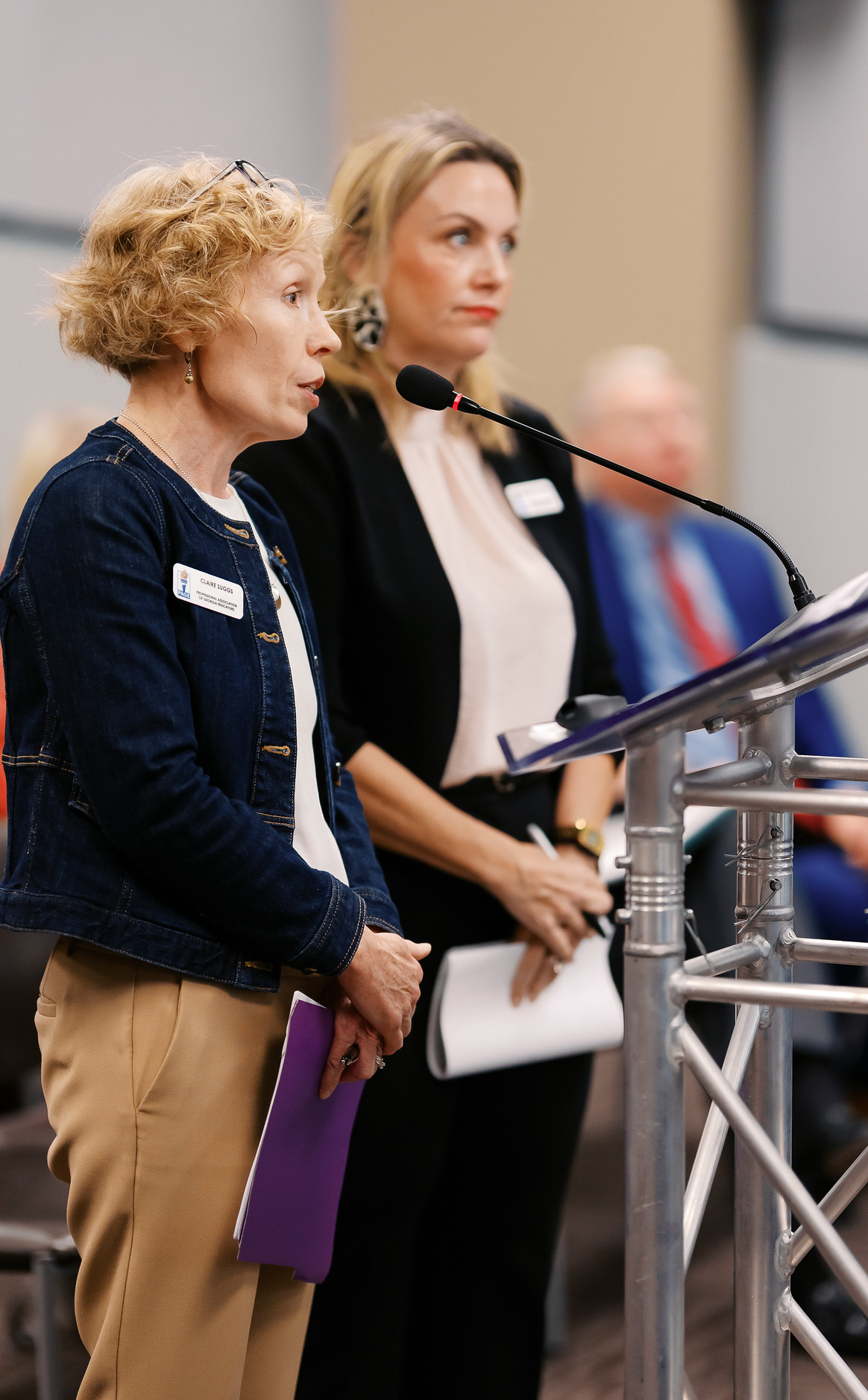
Margaret Ciccarelli, PAGE director of legislative services, and Claire Suggs, PAGE senior policy consultant, emphasized the need to add steps to the state salary schedule to help retain veteran educators. Currently, the state does not fund any salary step increases after 21 years of service. According to reports by the Teachers Retirement System of Georgia, teachers retire on average with 25.5 years of service.
They presented data obtained from Georgia school district leaders demonstrating that 40% of surveyed districts provide salary steps beyond 21 years of service via local funding. Suggs stated that insufficient local funds were the main reason districts did not offer late-career salary steps. Roughly 75% of survey respondents reported they believed additional salary steps increase retention of veteran teachers.
Ciccarelli and Suggs described negative effects that a lack of late-career salary steps can have on veteran educators, such as loss of purchasing power due to inflation and lower retirement pension payments. They also illustrated the replacement costs districts incur when filling vacant positions. PAGE staff then presented multiple options for adding a state-funded salary step and emphasized that adding a 5% increase at year 26 would be the most cost-effective way to improve educator retention.

Ciccarelli and Suggs also presented a list of recommendations from school district leaders for improving veteran teacher retention.

Following their presentation, Ciccarelli and Suggs answered several questions posed by study committee members. Responding to comments that the state's focus should also be on preventing the loss of new teachers, Ciccarelli and Suggs highlighted PAGE's New Teacher Initiative Report, which was released shortly after the committee meeting. This report provides several recommendations for better supporting new teachers in Georgia.
Appropriations Subcommittee Chairman Discusses State Investment in Education

Rep. Matt Dubnik (R-Gainesville), chair of the House Appropriations Education Subcommittee, spoke to the study committee virtually and answered questions from committee members. He stated that state lawmakers have been largely focused on general teacher pay raises, as well as strong investments in literacy and school safety. Dubnik mentioned that he has yet to be formally approached with a concrete plan and cost estimate for adding steps to the state salary schedule. He asked for more information about the number of classroom teachers with 20 years of experience and the reasons teachers leave the profession.
Columbus State Dean Speaks About Strengthening the Teacher Pipeline

Margie Yates, dean of Columbus State University’s College of Education and Health Professions, offered several suggestions to strengthen the teacher pipeline and stressed that improving teacher retention and recruitment are both important and should not compete for policymakers' support. Yates provided additional information on the importance of veteran teachers, including their ability to mentor new teachers and provide leadership and stability in schools. She also shared several testimonials from educators on this subject.
Similar to PAGE, Yates advocated adding steps to the state teacher salary schedule, specifically calling for a step at year 28.

In addition to salary steps, Yates advocated for paid student teaching and shared testimonials demonstrating the difficulties education students face with unpaid student teaching.

Other Presentations
Muscogee County Superintendent David Lewis thanked lawmakers for the teacher pay increases and for continuing the educator return-to-work program. He shared feedback from teachers that salary steps beyond 21 years would help retention.
Harris County Superintendent Michael Barden echoed support for adding salary steps, suggesting they be added at years 23, 26, and 29. He also suggested consideration of additional steps beyond 30 years due to the tremendous value veteran teachers provide.
Lewis and Barden both stressed the importance of mentoring new teachers and shared information on mentoring programs in their districts. They also each noted that school districts face substantial financial pressure from rising healthcare costs for non-certified employees, making it more difficult to allocate local funds to other needs. In response to these comments, Rep. Chuck Martin (R-Alpharetta) referenced discussions that had taken place in the Blue-Ribbon Study Committee on Local Government Taxation, Funding, and Budgeting regarding the possibility of allowing districts more flexibility in removing and returning employee groups to the State Heath Benefit Plan to help curb health insurance costs.
Committee Next Steps
The House Blue-Ribbon Study Committee on Education Performance Metrics and Workforce Stability is set to meet Sept. 30.