House Study Committee Focuses on the Needs of Rural Schools and Early Childhood Education
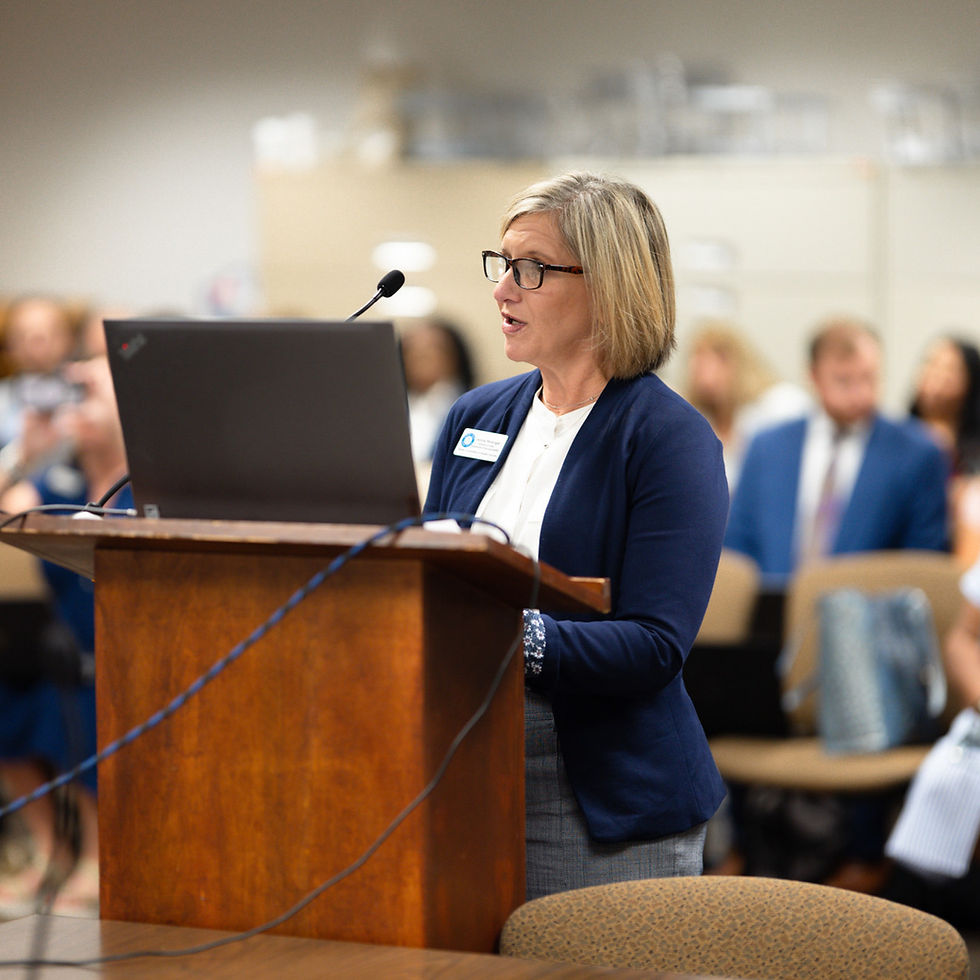
The House Blue-Ribbon Study Committee on Education Performance Metrics and Workforce Stability held its fifth meeting Oct. 14 in Fitzgerald. This meeting focused on the needs of rural schools, early childhood education, and non-certified staff.
The committee is chaired by Rep. Bethany Ballard (R-Warner Robins) and has a dual focus on studying Georgia's state accountability assessment, the College and Career Ready Performance Index (CCRPI), and strengthening the educator workforce.
PAGE presented at two prior committee meetings and made multiple recommendations, based on PAGE survey data, intended to strengthen Georgia's educator workforce. Those presentations are linked below and include recommendations to better support new teachers, teachers in high-poverty schools, and special education teachers. PAGE also strongly recommended adding a veteran teacher step to the state salary schedule and strategies to protect teacher planning time, including updating the state funding districts receive for substitute teachers.
Ben Hill County & Toombs County Schools Share Rural School Perspective


Jaquetta Brown, director of federal programs for Ben Hill County Schools, described the district’s challenges, including high levels of student poverty and difficulty recruiting and retaining teachers. She also shared information and concerns about CCRPI.

Tonawanda Irie and Brandon Hartley with Toombs County Schools further stressed that the current CCRPI structure can harm rural schools. Specifically, they asserted that the current high weight given to Content Mastery harms schools where large percentages of students live in poverty. Schools with high Readiness and Closing Gaps scores can still be weighed down by low Content Mastery scores, even though test scores are strongly correlated with household income levels. Irie and Hartley proposed re-weighting CCRPI to give greater emphasis to metrics based on student growth or progress, while reducing the weight of Content Mastery. They also proposed eliminating the single CCRPI score altogether, as it could distort the true picture of a school's performance.

Multiple Groups Describe Early Child Care and Education Needs

GCCA

Ideisha Bellamy,chief executive officer of the Georgia Child Care Association (GCCA), provided an overview of issues facing the state's child care industry. A poll of GCCA members shows that a majority of respondents have faced hiring challenges or classroom closures due to staffing shortages. GCCA President Michelle Smith Lank described the high return on investment of early childhood education, emphasizing educational outcomes such as literacy rates. GCCA Past President Courtney May further detailed issues facing the early childcare workforce, including high turnover, significant training requirements, and competition from the gig economy. She discussed a range of ways to better support early childcare and education, such as increased investment in existing support programs and expanded behavioral health support for students. Smith concluded the presentation by providing GCCA's advocacy priorities.

DECAL

Georgia Department of Early Care and Learning (DECAL) Commissioner Amy Jacobs provided an overview of Georgia's Pre-K workforce and highlighted recent state investments, such as increased salaries, that have improved recruitment. She then pivoted to discussing the state's licensed childcare workforce and the issues it faces. Jacobs stressed that compensation levels are the central challenge for this workforce, and pay cannot be easily raised, as it would lead to higher fees for parents. Jacobs also provided an overview of how DECAL supports the childcare industry.

Child Development Schools, Chroma Early Learning Academy, and
Milestone Education
Ellen Reynolds spoke on behalf of Child Development Schools, Chroma Early Learning Academy, and Milestone Education, offering a range of suggestions to support the childcare industry. These suggestions include increasing pay through various means, supplementing childcare employee benefits, and increasing support for children with special needs. Reynolds focused on four specific legislative priorities, which are:
Supplementing childcare for childcare staff
Establishing an early educator tax credit
Expanding early intervention support for children with special needs
Expanding early childhood classroom supports
Educator Workforce Presentation
Rachel Stone, director of government affairs for the Georgia Association of Educators (GAE), provided the final presentation alongside GAE President Wayne Huston. Stone shared survey findings focused on why teachers and school support staff leave or stay in the profession. Benefits such as healthcare and retirement were the most influential reasons to stay, while workload and staffing were the most impactful reasons to leave. Rural educators noted lagging pay and staffing as specific concerns. Meanwhile, early childhood professionals noted issues with the level of testing, while support staff were especially likely to say that benefits make them want to stay in the profession. Stone then provided examples of educator workforce initiatives undertaken by other states before concluding with a list of recommendations to stabilize Georgia's education workforce, along with estimated costs for implementing each recommendation. Huston provided brief remarks at the end of the presentation.