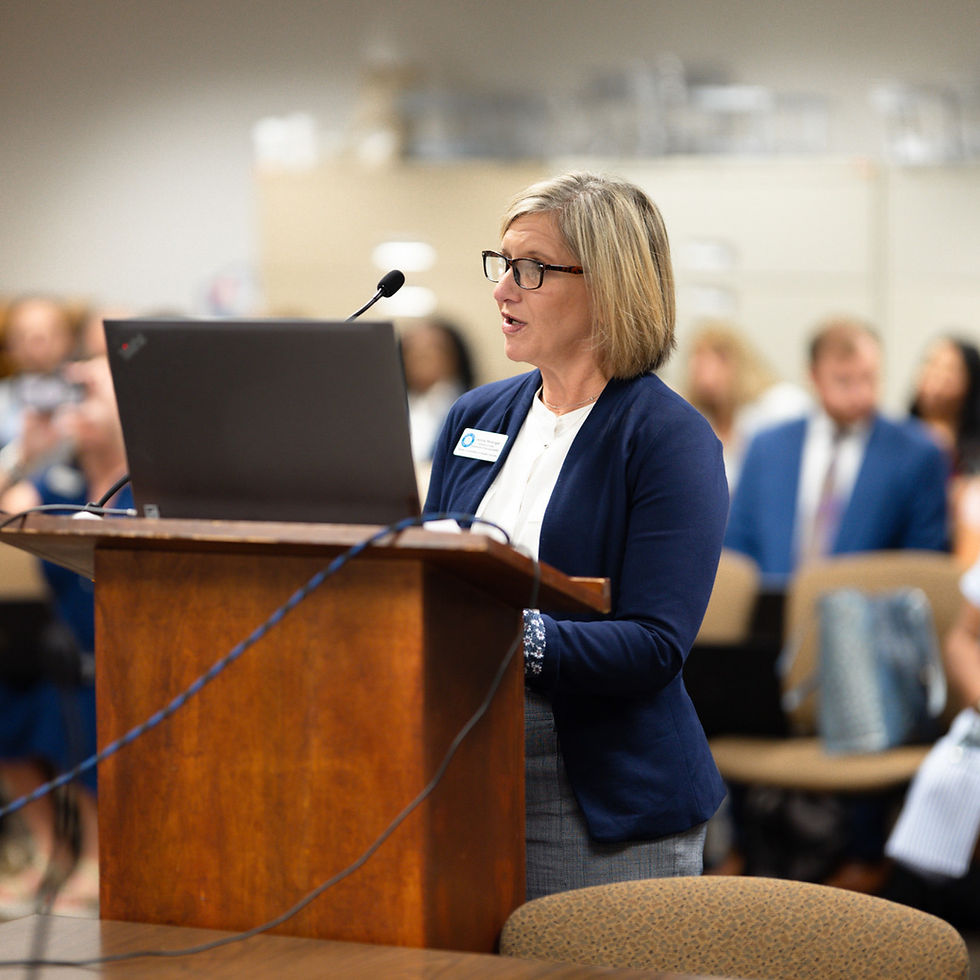
House Study Committee Meets to Examine Local Government Taxes and Budgets
The House Blue-Ribbon Study Committee on Local Government Taxation, Funding, and Budgeting held its first of five scheduled meetings Wednesday, July 22, in Cartersville. As part of the agenda, multiple organizations representing local governments, including the Georgia School Boards Association (GSBA) and the Georgia School Superintendents Association (GSSA), testified about local finances and tax collection.
Policy Background and Committee Focus

Property tax reform in Georgia has been a major topic of discussion over the last few legislative sessions. This year, the General Assembly passed SB 33, the Homeownership Opportunity and Market Equalization Act of 2026. Originally introduced as the Georgia Hemp Farming Act by Sen. Kay Kirkpatrick (R-Marietta), the bill’s provisions were stripped by the Senate and replaced with tax provisions. SB 33 places all local governments, including school systems, into a floating homestead exemption that limits increases in the taxable value of homes to the prior year’s rate of inflation. Previously, local governments could opt out of this exemption, but SB 33 removes that option.
Legislators have asserted that property tax relief legislation has been enacted in response to the financial strain that rising tax bills have placed on Georgians. Conversely, advocates for local governments have expressed concern about limiting local communities’ taxation authority, as property taxes are a major source of local revenue. According to GSBA, nearly half of school district funding comes from local property tax collections.
The Blue-Ribbon Study Committee on Local Government Taxation, Funding, and Budgeting's official description states it "will evaluate Georgia’s local funding mechanisms to strengthen transparency, ensure fairness for hardworking taxpayers, and increase fiscal accountability for local governments."
Education Organizations Provide Information on Local School Funding

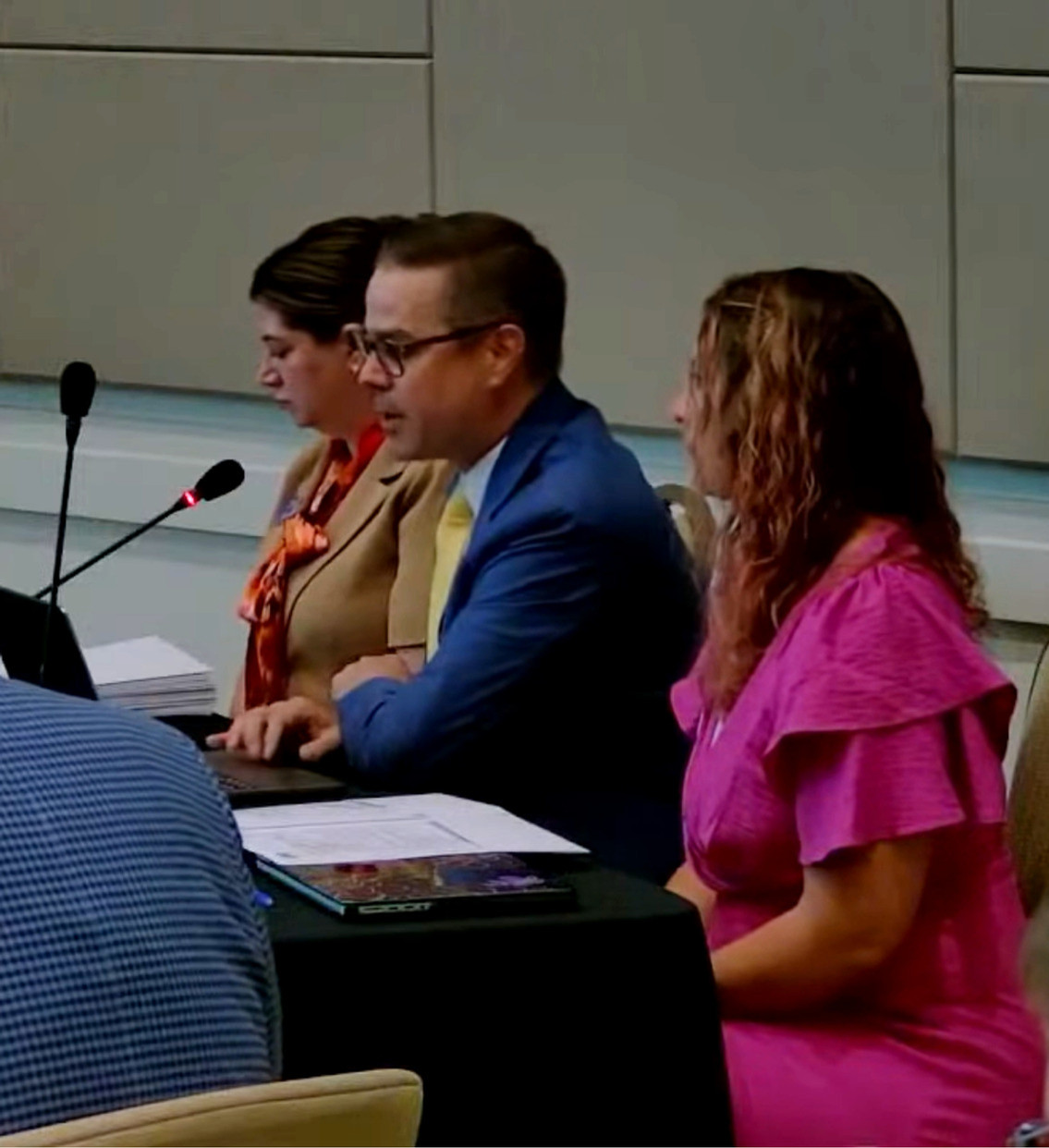
GSBA Director of Policy and Governmental Relations, Justin Pauly, provided legislators with information on local school funding and expenditures.
Pauly began by outlining how Georgia schools are funded and stated that, since 1987, state funding has shrunk as a percentage of overall funding while local and federal funding have grown in proportion. Currently, local funding accounts for 49% of total Georgia school funding, while state and federal funding account for 42% and 9%, respectively. He also asserted that a significant portion of local school expenditures is driven by state or federally mandated policies or requirements.
Pauly explained that, compared to cities or counties, school districts have more limited options for collecting revenue and generally cannot access local sales tax revenues for operating expenses. Additionally, school district property tax collections are legally capped at 20 mills, with a few exceptions provided by local legislation.
Pauly concluded by thanking state officials for the recent increases in school funding and made four general requests for future consideration. These included:
Modernizing the state's school funding formula
Addressing the fiscal impact of state requirements by means such as increasing substitute teacher pay
Creating SHBP flexibility for non-certified employees
Preserving local control while ensuring proper accountability and transparency
Following the presentation, several study committee members asked GSBA a variety of questions. They also requested more information about state mandates and requirements.

GSSA staff, along with Bremen City Schools Superintendent Shannon Christian, presented next and largely focused on providing further context to the questions posed by legislators. Christian stated that of the $7.7 million increase in expenditures his district has seen since 2021, $6.6 million was due to state mandates such as pay raises and insurance cost increases.
Health Care Costs Draw Legislator Focus
Comments by GSBA and GSSA regarding the rising costs of providing SHBP insurance benefits to non-certified staff drew heavy focus from study committee members. Unlike certified positions such as teachers, the state does not fund SHBP costs for non-certified positions. Health insurance costs have risen sharply in recent years, and significant portions of local school district budgets are now dedicated to funding these costs.

Study committee members asked GSBA and GSSA if their members would appreciate greater flexibility in shopping for health insurance plans. Representatives from both groups replied that they believed school districts could benefit from more flexibility and noted that once a district leaves SHBP for some of its employees, it cannot return that employee group to SHBP coverage in the future.
Committee Next Steps
The Blue-Ribbon Study Committee on Local Government Taxation, Funding, and Budgeting will next meet on Wednesday, Aug. 19, at the State Capitol. A detailed agenda for the meeting has not yet been posted.