Committee Workday: Student Cell Phone Ban, Chronic Absenteeism, and Maternal Birth Leave Bills Advance. Return-to-Work Bill Heard with No Action
Though the House and Senate did not hold floor sessions today, plenty of action on education legislation occurred in multiple committee meetings.
Senate Committee Approves 9-12 Cell Phone Ban and Additional Maternal Birth Leave


The Senate Children & Families Committee unanimously approved HB 1009 by Rep. Scott Hilton (R-Peachtree Corners) banning student use of cell phones and other electronic devices from bell to bell in grades 9-12, beginning in the 2027-2028 school year. Students participating in dual enrollment, work-based learning, or apprenticeship programs off campus are excluded from the ban. E-readers are also removed from the list of prohibited devices. Hilton highlighted survey results collected by Georgia Southern University, in collaboration with PAGE, showing strong educator support for extending the existing K-8 ban to high school grades.
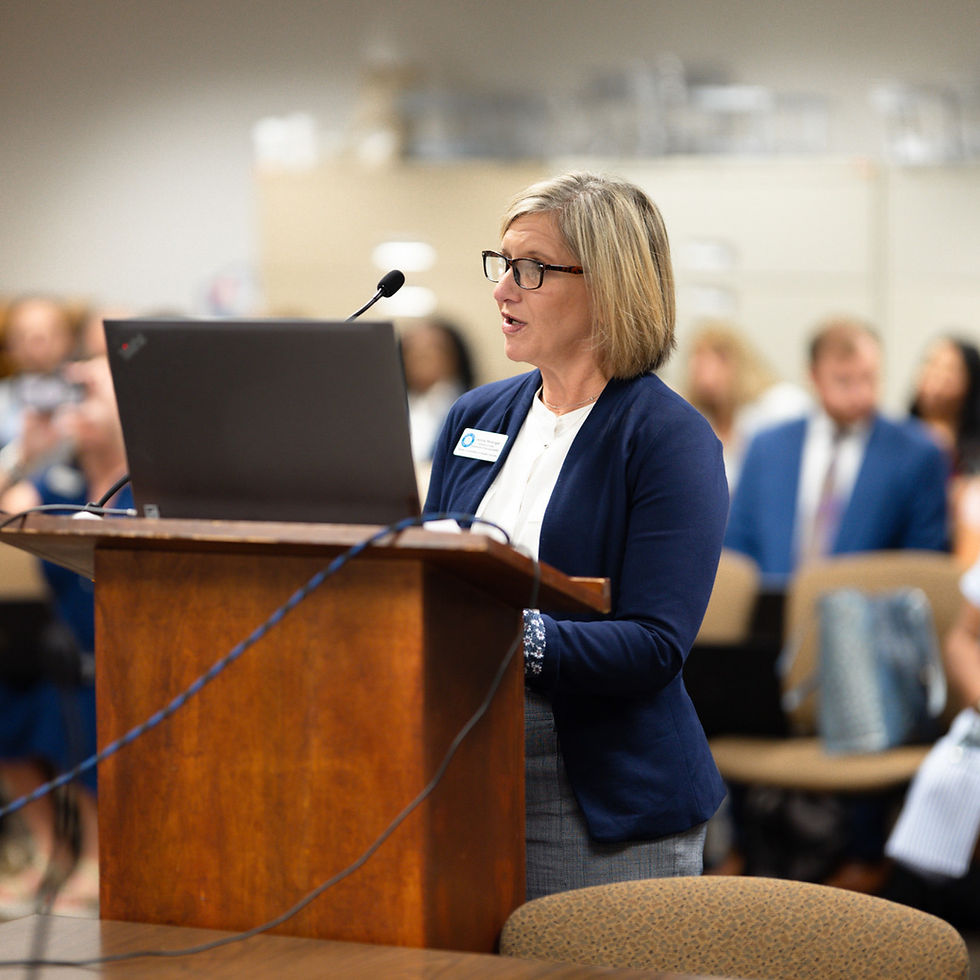
PAGE Legislative Services Specialist Josh Stephens shared PAGE’s strong support of the bill with the committee, highlighting data from the Georgia Southern University survey, including:
Ninety percent of educators support the current restrictions in grades K-8, and 90% of educators support a high school ban.
Eighty-seven percent of respondents indicated that student misuse of their personal devices is a major source of classroom distraction. Participants believe misuse of personal devices negatively impacts student focus (95%) and interferes with learning (96%).
Eighty-eight percent of participants indicated that student misuse of personal electronic devices during school contributes to student conflicts and bullying incidents. Conversely, 91% of educators do not feel that banning devices would interfere with their classroom instruction.
Fewer than 10% of educators believe banning devices will compromise school safety, while more than 90% of respondents express confidence in their school’s emergency communication and response plan.
The committee also unanimously approved HB 1118 by Rep. Sandy Donatucci (R-Buford), which seeks to create a new form of leave for qualified state and local school employees called "maternal birth leave," providing 120 hours of paid leave to mothers following childbirth. This leave could only be used in the three weeks immediately following childbirth and would precede the use of any other paid paternal leave. An employee must have completed six months of continuous employment to be eligible for maternal birth leave. Hourly employees must have worked 700 hours during those six months.
Stephens also testified in support of HB 1118, stating, “Providing paid time off to recover from childbirth is a valuable strategy to support educators, which can boost retention. HB 1118 builds on vital steps the General Assembly has taken in recent years to assist new parents in balancing their parental and work responsibilities and provide time to foster the bonds so important to children’s wellbeing.”
House Retirement Hears Return-to-Work Bill

The House Retirement Committee heard but took no action on SB 150, which seeks to reauthorize Georgia’s educator return-to-work (RtW) program until 2034. The legislation would allow educators with 25 years of creditable service to return to full-time work, after a 12-month waiting period, and draw retirement benefits while teaching in qualified positions. These include English language arts (as long as the teacher holds a current dyslexia or reading endorsement approved by the Professional Standards Commission), science, social studies, special education, math, and Career, Technical and Agricultural Education (CTAE).
PAGE Legislative Communications Specialist Robert Aycock testified in support of SB 150, citing RtW's importance in filling high-need positions. He also urged the committee to take action on the bill in the near future.
The RtW program will expire this year unless it is reauthorized. Please contact lawmakers to express support for both SB 150 and HB 372, sponsored by Rep. Bethany Ballard (R-Warner Robins), and urge the General Assembly to continue working to extend this important program. Information on the bills and how to contact relevant legislators can be found HERE.
House Subcommittee Approves Senate Bill Addressing Student Absenteeism
The House Education Subcommittee on Curriculum and Academic Achievement met to consider SB 513, the Every Day Counts Act by Sen. Jason Dickerson (R-Canton). The legislation seeks to codify recommendations of the Senate Study Committee on Combating Chronic Absenteeism in Schools.
The bill requires local school systems to adopt a multi-tiered framework of attendance supports and interventions. It defines a chronically unexcused student as a student with five unexcused absences during the first 50 days of the school year. After the 50th school day, a chronically unexcused student is one who has missed 10% of the total number of school days to date. It establishes attendance review teams at the district level and, in some cases, at the school level to review cases and develop written attendance intervention plans in collaboration with chronically unexcused students and their parents or guardians. Schools must regularly update compliance records, designate chronically unexcused students as ineligible for extracurricular and interscholastic activities until an intervention plan is in place, and report noncompliance with the plans to the Georgia Department of Education (GaDOE). SB 513 prohibits the Department of Driver Services (DDS) from issuing an instruction permit or driver’s license to a minor under age 18 unless the student is enrolled in school or compliant with an approved attendance intervention plan.
When presenting the legislation, Dickerson emphasized that, in contrast to some media reports to the contrary, his legislation does not affect active driver’s licenses. He explained that a fiscal note had not been done on the bill because Senate leaders want schools to use existing employees to satisfy the mandates with maximum flexibility toward the bill’s goals. One subcommittee member expressed concern that the legislation provides absent students with few incentives while imposing disincentives, and another emphasized that nothing in the bill prevents local schools from offering incentives.
SB 513 was approved by the subcommittee and will next be considered by the full House Education Committee.
House Ed Subcommittee Advances PAGE-Supported Teacher Tax Credit, Foster Child School Enrollment, and Charter School Bill
The House Education Subcommittee on Policy and Innovation approved three Senate bills, which now advance to the full House Ed Committee.
SB 431 by Sen. Kay Kirkpatrick (R-Marietta) requires enrollment of foster care students who transfer to the school within three days. The legislation also prohibits assigning foster care students to remote learning due to missing records. If a school fails to comply, the principal or their designee must provide the parent or guardian with contact information for the appropriate RESA student affairs officer and GaDOE's chief privacy officer (CPO). GaDOE could also require the school to implement a corrective action plan upon the request of the RESA student affairs officer or the CPO. SB 431 incorporates some recommendations of the Senate Study Committee on Additional Services and Resources for Transition Age Youth in Foster Care, which met last year. The final report of the study committee is available HERE.
Due to Sen. Kirkpatrick chairing another committee, Rep. Beth Camp (R-Concord) presented the bill on the senator's behalf. Camp indicated Kirkpatrick worked with Rep. Holt Persinger (R-Winder), who sponsored a comprehensive 2025 House measure on school safety — including student enrollment and records transfer — to ensure that Kirkpatrick’s bill did not conflict with the new law.
SB 369 by Sen. Shawn Still (R-Norcross) would establish and define the concept of "Dropout Recovery Charter Schools," which would primarily serve students at high risk of dropping out. The bill also calls on the State Board of Education (SBOE) to develop rules and regulations governing such schools and requires the Governor's Office of Student Achievement (GOSA) to separately report on the schools' performance.

PAGE Director of Legislative Services Margaret Ciccarelli encouraged the subcommittee to support SB 515 by Sen. Billy Hickman (R-Statesboro), which would continue the teacher tax credit and make several changes to the program. It will end this year without legislative reauthorization.
SB 515 would extend the deadline for new tax credit applications until 2031. It would also lower the tax credit for educators not already receiving the $3,000 tax credit to $2,500. It increases the cap on the number of teachers who can participate from 1,000 to 1,200. If more than 1,200 teachers apply, those in rural schools will be prioritized. Hickman’s legislation requires participating teachers to teach in statewide high-needs areas of math, special education, or CTAE. It is also available for teachers in reading, writing, or ELA, provided that qualifying teachers hold a current GaPSC-approved dyslexia or reading endorsement. The committee substitute of the bill states that the total amount of these tax credits provided cannot exceed $3 million for any fiscal year.
Federal Tax Credit Voucher Bill Approved in House Ways and Means Subcommittee
The Income Tax Subcommittee of the House Ways and Means Committee approved a substitute version of SB 446 by Sen. Clint Dixon (R-Gwinnett), which would enable Georgia to participate in the federal Education Freedom Tax Credit program created by the One Big Beautiful Bill Act (OBBBA) and automatically opt Georgia into the program each year. Rep. Scott Hilton co-presented the bill with Dixon, saying the language in SB 446 was stripped and replaced with HB 1135, the House’s version of the federal tax credit program opt-in and enables public schools to participate in the program. SB 446 originally disallowed public schools from participating. The bill now moves to the full committee for consideration.
House Ed Appropriations Subcommittee Hears from State Superintendent Woods
Committee members approved SB 498 by Sen. Clint Dixon, which would establish the Georgia Charter School Facilities Authority. The authority would provide revolving loan funds or other types of financial assistance to charter schools to build, renovate, or rehabilitate facilities. Loans would be capped at $2 million or 20% of the total project cost, whichever is lower, or, for renovation projects, at $200,000. SB 498 now moves to the House Rules Committee.

Committee members also had a robust discussion with State Superintendent Richard Woods on key issues, including literacy, student absenteeism, early childhood, and parent involvement. Members raised questions about student outcomes, including dissonance between rising graduation rates and low literacy rates in early grades, and how GaDOE is addressing them. Woods highlighted some of GaDOE’s initiatives, including more rigorous performance standards in math and English Language Arts, the state’s strong CTAE program, and the department’s Office of Whole Child Supports, which assists districts and communities in providing wraparound supports that many students need to thrive. Rep. Chris Erwin (R-Homer), chair of the House Education Committee, applauded GaDOE’s policy staff and said there is an opportunity to build a stronger partnership between legislators and Woods, which will benefit students.
Senate Education & Youth Committee Advances Several House Education Bills
The Senate Education & Youth Committee approved two bills but did not approve another.
HB 971 by Rep. Rick Townsend (R-Brunswick), which allows homeschool and private school students to enroll in college and career academies if they reside in the same RESA district as the academy. These students would also be allowed to enroll if they live in a neighboring school district adjoining the college and career academy, even if the neighboring system is not in the same RESA. School districts would opt in to the bill. The bill passed with one dissenting vote and moves to Senate Rules.
The committee unanimously approved HB 907 by Rep. Jan Jones (R-Milton), which requires local school systems within the attendance zone of a completion special school to either enter into a collaborative operating agreement with the school or provide comparable programs and services for students in grades 9–12, including dropout prevention, academic intervention, credit recovery, and flexible scheduling. The bill permits parents or guardians to directly register eligible students for participation in completion special school programs and requires coordination between the completion special school and the resident school system when a student is not currently enrolled. HB 907 requires completion special schools to provide program information to resident school systems twice annually, and that school systems share this information with students and families. Additionally, school systems must provide contact information for students who stop attending or withdraw within 10 school days, establish parameters for operating programs outside assigned attendance zones, and authorize transition periods for affected students. HB 907 now moves to Senate Rules.
HB 1220 by Rep. Bethany Ballard (R-Warner Robins) exempts students with an IEP, a Section 504 plan, or a diagnosis of dyslexia, autism spectrum disorder, speech language delay and disorder, or other identified condition from the six-week public school attendance requirement to be eligible for a private school voucher awarded by a Student Scholarship Organization (SSO). Students whose parents are active military personnel stationed in Georgia would also be exempt from the six-week attendance requirement. The legislation includes language, suggested by PAGE, requiring participating private schools to disclose medical or behavioral conditions they accommodate. In a unique procedural move, Sen. Elena Parent (D-Atlanta) moved “Do Not Pass” on the bill, forcing a vote that ended in a tie and the bill’s failure. Several Republican members of the committee were in other committees presenting bills, which allowed Democrats to succeed in their maneuver. Sen. Greg Dolezal (R-Cumming) suggested that the bill could be brought up at a later meeting.
Senate Committee Considers DREAM Scholarship
The Senate Higher Education Committee reviewed HB 1413 by Rep. Chuck Martin (R-Alpharetta), which would create the mechanism to operationalize the DREAM Scholarship at the Georgia Student Finance Commission. The scholarship, proposed by Gov. Brian P. Kemp, would establish a statewide need-based financial aid program for students in the University System of Georgia (USG) and the Technical College System of Georgia (TCSG). To be eligible, students would be required to:
Be a Georgia resident
Complete the Free Application for Federal Student Aid (FAFSA) form
Be enrolled in a minimum of six credit hours in an undergraduate program
Have unmet financial need
Maintain a 2.0 grade point average and make satisfactory academic progress
Complete a financial literacy program
Be engaged in paid or unpaid work at least part-time, which may include an internship, externship, volunteer work or military service
The maximum award amount would be $3,000 per academic year for a total of eight semesters or 12 quarters.
The legislature approved an addition of $325 million in the Amended Fiscal Year 2026 budget to launch the DREAM Scholarship.
HB 1413 would also create a service-based scholarship program for students enrolled in USG medical schools. After completing a residency program, participating students would be required to work in Georgia for four years. The bill would also revise the requirements for calculating HOPE lottery reserve funds.
This was a hearing only for the bill, so the committee did not take action. Committee Chair Max Burns (R-Sylvania) indicated the committee would vote on the bill at its Tuesday, March 24, meeting.
Upcoming Schedule
Wednesday, March 18 - Legislative Day 33
House Ways and Means, 406 CLOB, 8 a.m.
House Higher Education, 606 CLOB, 1 p.m.
Thursday, March 19 - Legislative Day 34
Senate Education & Youth, 307 CLOB, 1 p.m.
Friday, March 20 - Legislative Day 35