Special Legislative Session: House and Senate Education Committees Review Literacy Implementation
Today, a special legislative session of the Georgia General Assembly called by Gov. Brian P. Kemp continued. The special session was called to address voting equipment changes ahead of Georgia's November general election. Kemp also authorized legislators to examine potential changes to local property taxes.
So far, special session highlights have included Republican lawmakers' backing local legislation that would allow local governments to place a 1% sales tax on the ballot, with revenue used to offset or eliminate local homestead property taxes. Democrats voted against the plans, which require two-thirds approval in each chamber, causing the bills to fail. Legislators were also directed to begin redistricting Georgia's congressional and state legislative districts for the 2028 election, but Republican House and Senate leadership opted to delay redistricting discussions until next year.
Literacy Focused Joint Education Meeting


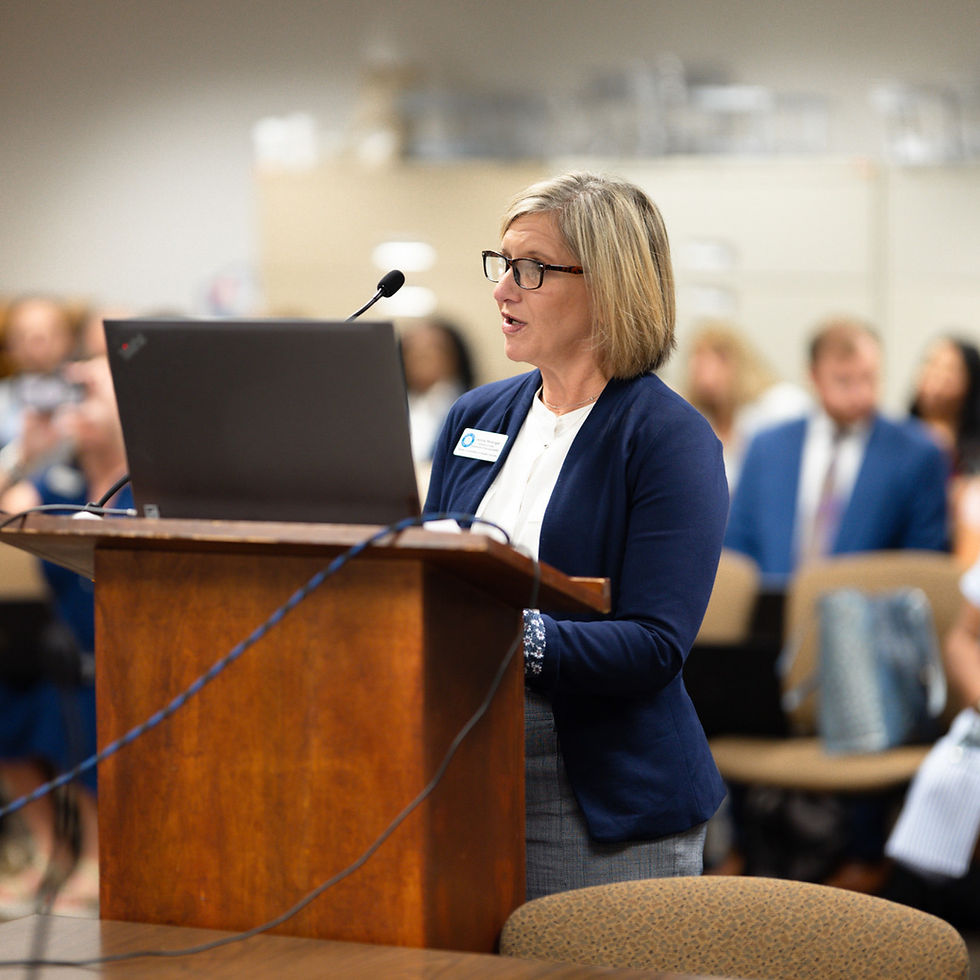
The House Education Committee and Senate Education and Youth Committee held a joint meeting this morning to discuss implementation of HB 1193, the Georgia Early Literacy Act of 2026, which passed during the 2026 legislative session. Committee members heard updates from the major agencies involved in literacy instruction, as well as from the Regional Education Service Agencies (RESAs) and education preparation providers. House Education Committee Chair Chris Erwin (R-Homer) reiterated his belief that the bill is the most impactful education legislation since the HOPE Scholarship was approved in the 1990s. Senate Education Chair Billy Hickman (R-Statesboro) characterized HB 1193 as the "Big Beautiful Literacy Bill," emphasizing the need for continued collaboration across agencies and the inclusion of $70 million in the Fiscal Year 2027 state budget for literacy coaches.
GOEWS (Formerly GOSA)

Fran Dundore, executive director of the Governor's Office of Education and Workforce Strategy (GOEWS) -- formerly known as the Governor's Office of Student Achievement (GOSA) -- and Stacey Lutz, literacy coaching coordinator at GOEWS, guided committee members through the agency's responsibilities outlined in HB 1193.
Dundore began the agency's presentation, highlighting the major changes created by HB 1193:

She also framed collaboration between agencies as the most important factor for success in Georgia's literacy initiatives. The following agencies have been engaged in literacy work through the Literacy Coordinating Committee described below.

Lutz described the roles of the main agencies involved in literacy instruction, though she noted that many other agencies and groups provide support.

Lutz and Dundore walked committee members through the implementation timeline, covering action so far and future timelines:

Lutz elaborated on the training and state-level supports provided for literacy coaches:


GaDOE & SBOE

State Board of Education (SBOE) Chair Phenna Petty joined the Georgia Department of Education's (GaDOE) Director of Literacy, Amy Denty, to share the organization's HB 1193 implementation progress. Petty emphasized that the SBOE is prepared to approve many aspects of HB 1193 through its rulemaking process and stands ready to partner with policymakers to ensure the bill is implemented smoothly.
Denty began by highlighting GaDOE and SBOE responsibilities as described in HB 1193:

Denty mentioned that the SBOE currently has three literacy-related rules open for public comment. CLICK HERE for instructions on how to submit public comments on the rules listed in the following slide:

Next, Denty shared resources developed by GaDOE to support districts as they begin to implement HB 1193. These documents include frequently asked questions about funding for literacy coaches and about the bill itself. Click HERE for the HB 1193 FAQ. The QR code for the school-based coach funding FAQ leads to a password-protected document.


GaPSC
Georgia Professional Standards Commission (GAPSC) Executive Secretary Jody Barrow updated committee members on GAPSC's current literacy initiatives related to the implementation of HB 1193.
GaPSC has been tasked with developing a literacy coaching endorsement, with the timeline for development and implementation provided below.


Barrow also explained who would be eligible for the endorsement, the prerequisite knowledge required, what endorsement completers must be able to do after completing the program, and the assessments used to measure participants' knowledge and skills.


Barrow also described the inclusion of literacy assessments in the Georgia Assessments for the Certification of Educators (GACE), one of the first educator certification assessments in the United States to include a dedicated literacy assessment grounded in the science of reading.

Georgia Southern University
Amy Lingo, dean of the Georgia Southern University College of Education, presented data from the Georgia Literacy Impact Initiative, a literacy coaching pilot spanning four schools in the Candler County and Toombs County school districts, comprising 66 teachers and approximately 1,778 students. The Georgia Southern Literacy Center led this work, and Lingo described the outcomes in her presentation to lawmakers. She emphasized that coaching teachers to teach literacy builds proficiency.


Regional Education Service Agencies (RESAs)
Leigh Ann Putnam, executive director of Metro RESA; Juli Alligood, executive director of Middle Georgia RESA; and Laurie Allison, executive director of Northeast Georgia RESA, quickly delivered their presentation, as a non-education legislative committee meeting was scheduled to begin shortly after.
Putnam described the purpose of RESAs, explaining their creation under Georgia statute 60 years ago, the membership and board-of-control governance of RESAs, and the ongoing relationship between GOEWS on literacy coaching. Alligood described the HB 538 charge that launched literacy coaching, with 118 regional coaches logging 172,025 educator engagements this past year.

Allison described a recent proposal to limit RESA coaches to working only through or alongside school-based coaches, which, if implemented last school year, would have cut the regional coach reach from 172,000 engagements to around 20,000. She asked that RESA coaches be allowed to work directly with teachers and to serve schools that haven't yet hired a coach, while affirming full support for HB 1193.


The meeting adjourned abruptly due to time constraints. Learn more about HB 1193 and all legislation passed during the 2026 regular session in the comprehensive PAGE 2026 session summary.