Day 37: Revised Literacy Bill and FY 2027 Budget Approved by Senate Committee as the Senate Passes Massive Expansion of Private School Voucher Expenditures
The House and Senate were in session late into the afternoon for Legislative Day 37, with each chamber considering education bills. The Senate resurrected a bill regarding school zone speed cameras, while the House passed additional financial accountability for school districts.
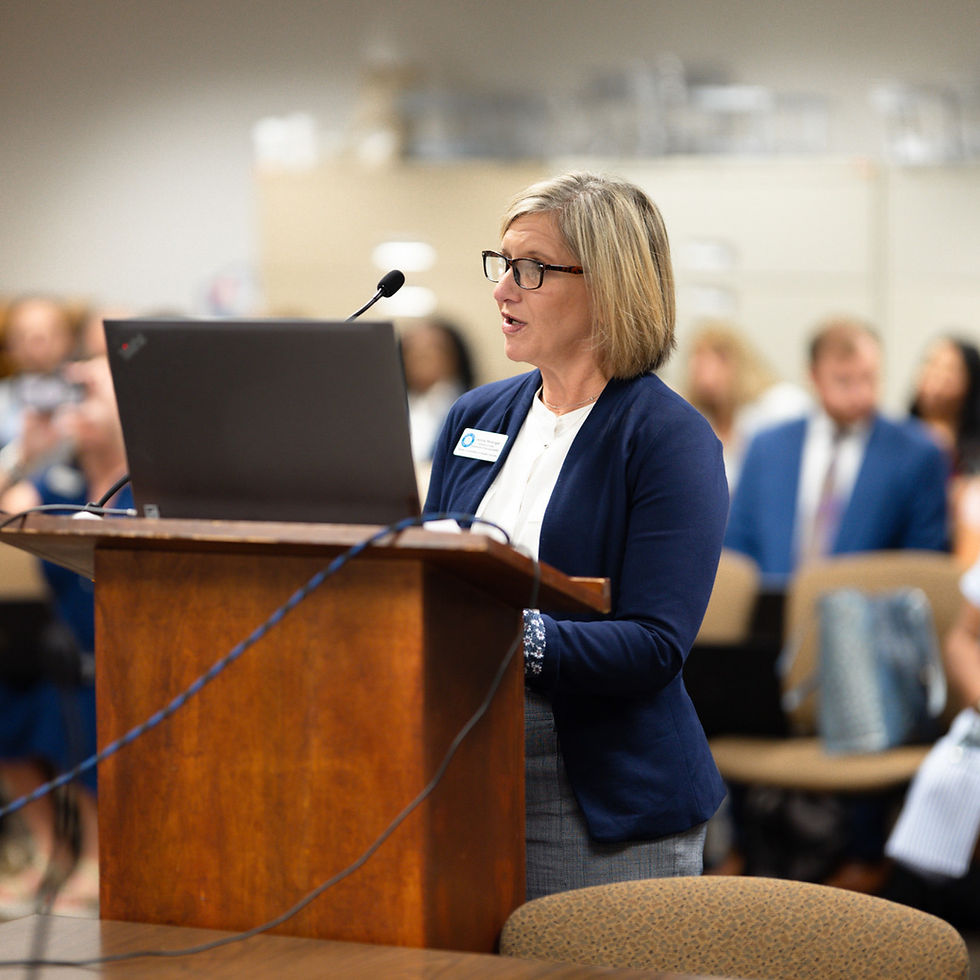
Before today's floor sessions convenend, the Senate Appropriations Committee approved a new version of the Literacy Act along with the Fiscal Year (FY) 2027 state budget.
Senate Appropriations Signs Off on Literacy Bill and FY 2027 Budget

The Senate Appropriations Committee passed a revised version of HB 1193, the Georgia Early Literacy Act of 2026, along with the Senate's proposed spending plan for FY 2027. The two bills are connected due to the cost of HB 1193, specifically $70 million for school-based literacy coaches that the Senate added to its budget proposal. Sen. Blake Tillery (R-Vidalia), chair of the Appropriations Committee, emphasized that the Senate shared the House’s commitment to improving reading outcomes for students, the importance of having literacy coaches to support classroom teachers, and the need to streamline and sustain existing literacy reforms.
In presenting the Senate budget proposal, Tillery explained that funding for literacy coaches would be distributed to districts as a grant, not through the Quality Basic Education (QBE) formula, as recommended by the House. He highlighted a $100 million increase to the state’s Employee Retirement System (ERS) to trigger regular and annual cost-of-living adjustments for state retirees who have not had routine adjustments for many years. The Senate spending plan increases the per-member-per-month employer cost of the State Health Benefit Plan (SHBP) to $1,935, a smaller increase than originally proposed by Gov. Brian Kemp, and adds $30 million for the Promise Scholarship, the state’s newest and third private school voucher program. Tillery noted that the addition of funding for these priority items and others resulted in the elimination or reduction of funds the House added to the FY 2027 budget.
Tillery presented key components of the Senate version of HB 1193, which include:
Fund a literacy coach for every school serving grades K-3 via a new grant program
Establish minimum requirements for a literacy coach to include: certification from the Georgia Professional Standards Commission (GaPSC); a minimum of five years of successful classroom teaching or literacy intervention in grades K-3; and knowledge of scientifically based reading research, expertise in reading instruction and intervention, dyslexia interventions, and data analysis
Establish the duties of school-based literacy coaches
Create regional literacy coaches at Regional Education Service Agencies (RESAs) to support school-based literacy coaches and outline their responsibilities
Require the State Board of Education (SBOE), in consultation with the Governor’s Office of Student Achievement (GOSA), to review and approve screeners every three years
Require the SBOE, in consultation with the GOSA, to approve a list of high-quality instructional materials (HQIMs)
Set new promotion requirements for first-grade students based on their risk of not attaining grade-level reading proficiency
Require the GaPSC to establish a literacy coaching endorsement by December 30, 2026
Sunset the Georgia Council on Literacy on December 31, 2026
After the committee voted to approve HB 1193, Tillery presented the Senate’s FY 2027 budget proposal. The Senate changes to the House’s version of the FY 2027 budget include:
Georgia Department of Education
-$325,051 reduction in one-time funds to complete storm damage repairs at FFA camps
-$498,206 reduction for support staff to prioritize private funds for direct student services in Agricultural Education
$45,000 increase for a Young Farmers Position
$128,571 for one financial review position at GaDOE (the House proposed two positions)
$240,000 for a statewide attendance officer (and reduction of funds for a chief financial turnaround officer proposed by House)
-$2 million reduction in funds for a planning grant for Southern Rivers Completion High School
-$1.4 million reduction in funds for college preparatory exams
$70.4 million increase for school-based literacy coaches in every school with grades K-3
$339,082 increase in formula funds for Residential Treatment Facilities
-$2.7 million reduction in funds for one-time grants to districts to purchase vision and hearing screening equipment. The Senate directs districts to use existing equipment and community resources already required to satisfy the Department of Public Health form 3300 to screen Pre-K to third-grade students
$38 million increase in pupil transportation formula grants
-$6 million reduction in QBE Equalization funds based on compliance with HB 1259 (2026 legislative session)
-$21.9 million reduction in Local Five Mill Share
$36.3 million increase to cover an increase in the employer contribution to the Teacher Retirement System from 21.91% to 22.32%
$11.7 million increase in the QBE to fund enrollment growth and teacher training and experience
-$261,018 reduction in formula funds for differentiated pay for newly certified math and science teachers
-$615,550 reduction in formula funds for charter system grants
$69 million increase to cover an increase in the employer contribution for the per-member-per-month cost of the State Health Benefit Plan
-$8.2 million reduction in QBE funds based on compliance with HB 1259
-$887,334 reduction in formula funds for school nurses
-$2.4 million reduction for training and experience in state schools
$1.5 million increase in funds for school social workers (a reduction from $2.6 million added by House)
-$1 million reduction in funds for an artificial intelligence and coding literacy program added by the House
-$1 million reduction in one-time funding and completion of construction industry certification program
The Senate’s budget plan retains the House proposal to provide school safety equipment grants via a $50 million bond.
Department of Early Care and Learning
$892,200 increase to cover an increase in the employer contribution for the per-member-per-month cost of the State Health Benefit Plan for Pre-K teachers
The Senate also directs DECAL to use existing funds to: 1) expand the Rising Pre-K program and add 25 new classes in the 2026-2027 school year; 2) cover year one of a three-year phase-in from three to five days of leave for Pre-K lead and assistant teachers; and 3) expand the Summer Transition Program. The House included funds for these items in its budget proposal, but the Senate removed them.
Governor’s Office of Student Achievement
$4 million for ongoing operations associated with Top State for Talent initiatives, including a Career Navigator System
$301,720 for two policy and reporting positions (the House proposed three positions)
-$1.6 million reduction in one-time funds for phase two research and landscape analysis, leadership pilot with RESAs, and a framework for the Georgia Reads community collaborative
-$663,837 reduction in funds pursuant to HB 1193
The Senate spending plan removes funds the House added for items related to literacy reform, including funds for professional development for teachers and literacy coaches, reviewing literacy screeners, and reviewing and recommending HQIMs, and recognizes action previously undertaken on these items. The Senate adds $5.5 million for an applied literacy center to be established at Georgia Southern University.
Georgia Student Finance Commission
The Senate shrunk the reduction in funding for the Promise Scholarship voucher program from a cut of $71 million to a cut of $41 million.
The Senate Appropriations Committee approved the budget, sending the Literacy Act and the FY 2027 budget (HB 974) to Senate Rules, which will schedule the legislation for floor votes.
Senate Votes to Expand Tuition Tax SSO Voucher Program
The Senate voted along party lines to approve HB 328, by Rep. Kasey Carpenter (R-Dalton). The bill expands the cap on Georgia's tuition tax credit Student Scholarship Organization (SSO) program, which currently diverts $120 million from the state general fund to private school vouchers. The Senate's version of HB 328 increases the cap to $225 million annually (the House-passed version raised the cap to $140 million annually). HB 328 also expands the waiver of the program's current six-week public school enrollment requirement to include children of active-duty military members, students with an IEP or 504 plan, and students with certain disabilities. It also includes language prohibiting General Assembly members and their spouses from receiving income from a student scholarship organization and sunsets the program on Jan. 1, 2032.
Language from HB 565 by Rep. Rick Townsend (R-Brunswick), increasing the PEACH Education Tax Credit from $15 million to $25 million, is included in the Senate version of HB 328.
During his presentation of the bill on the Senate floor, Sen. Shawn Still (R-Norcross) reported that the cap increase would allow the program to serve approximately 20,000 more students at the average scholarship amount of $4,800 per student. Still remarked that school choice helps children who need it most.
Sen. Josh McLaurin (D-Atlanta), Sen. Sally Harrell (D-Atlanta), Sen. RaShaun Kemp (D-Atlanta), and Sen. Jaha Howard (D-Smyrna) spoke against the bill, citing several factors, including lack of oversight on the SSOs, potential fraud in the program, lack of accountability measures for private schools accepting scholarships, and an affordability gap between scholarship amounts and private school tuition. Kemp mentioned the cap increase diverts state funding that could be used to fund more literacy supports for students.
Sen. Ed Setzler (R-Acworth) spoke in favor of the cap increase, citing the need for parental choice over where students attend school, which he asserted the SSO program allows. He said the scholarships are intended for families who wish to send their child to private school but may need help.
The bill will return to the House for consideration of the Senate's changes. If the House disagrees with changes, the bill will be assigned to a conference committee consisting of three members from each chamber, who will negotiate a final bill.
House Approves School District Financial Accountability Measure
The House unanimously passed SB 472 by Sen. Billy Hickman (R-Statesboro), which would expand the authority of the SBOE and DOAA related to fiscal oversight and governance of local school districts. The bill adds additional triggers to remove local board members, including if the state auditor deems a district high-risk or finds it has engaged in financial mismanagement or misconduct. SB 472 would establish procedures for hearings, temporary board appointments, reinstatement petitions for board members removed from their positions, and for permanent removal of board members. In addition to board governance provisions, the bill caps advance distribution of state-provided education funding at 50% of a school district's prior-year allotment, unless the state auditor determines that a larger advance is necessary. Districts would also be required to adopt and comply with state-directed financial monitoring and intervention plans assigned by the state auditor. SB 472 limits the length of contracts for superintendents of districts designated as high-risk by DOAA to one year. If the superintendent's contract is currently longer than one year, it will be considered void. Any new contract for the superintendent of a high-risk district must not be the subject of a state auditor finding for financial mismanagement or misconduct, and the superintendent must not knowingly fail to comply with a corrective action plan assigned under the provisions of the bill. If the superintendent violates the stipulations, the local board is authorized to terminate the superintendent's contract.
Several House Democrats spoke in opposition to the bill prior to its passage, mainly because it would allow the state auditor to recommend removing locally elected school board members and give the governor greater authority to remove them.
The bill now returns to the Senate for consideration of the House's changes.
School Zone Speed Camera Legislation is Revived
In a surprising move, Sen. Randy Robertson (R-Cataula) presented a substitute version of HB 651 by Rep. Alan Powell (R-Hartwell), which makes changes to how school zone speed cameras are approved and operated by local governments, specifically by allowing local referendums before a municipality or county approves a new speed camera contract. Each election authorizes the cameras for six years, then requires another referendum for continued use. The bill passed the Senate by a vote of 49 to 1.
HB 651 now moves back to the House for consideration of Senate changes.
Upcoming Schedule
Thursday, March 26 - Legislative Committee Workday
Senate Ed, 1 p.m., 307 CLOB
Friday, March 27 - Legislative Day 38
Tuesday, March 31 - Legislative Day 39
Thursday, April 2 - Legislative Day 40/Sine Die