Day 26: On Georgia Reads Day at the Capitol, Multiple Ed Bills Advance, but Student Discipline Bill Stalls
Both chambers held lengthy floor sessions today and voted on a variety of issues, including property tax reform. Few education bills saw floor votes, and several bills still await consideration as the Crossover Day deadline approaches Friday.
Another notable event was Gov. Brian Kemp signing the AFY 2026 Budget.
Georgia Reads Day at Capitol - Congrats to READBowl Champs!


Students, educators, and policymakers from throughout Georgia gathered under the Gold Dome to celebrate literacy and winners of the READBowl competition. Speakers included Dayle Burns, wife of House Speaker Jon Burns (R-Newington), GA Reads Coach Malcolm Mitchell, chairs of the House and Senate Education Committees Rep. Chris Erwin (R-Homer) and Sen. Billy Hickman (R-Statesboro), and Craig Harper, PAGE Executive Director.
PAGE was a sponsor of the event, and Harper presented awards to READBowl champions. Congratulations and kudos on the strong reading performance to winners Shryock's Busy Bees from Waynesboro Primary School, The Tenacious Tigers from Ranier Elementary School in Kingsland, The Indians from Albany Middle School, and students from Chattahoochee County High School!
Senate Approves School Masking Legislation and Bill Requiring Parental Notification for Non-Instructional Services & House Approves Bill to Provide Students Crisis Hotline Info
By a 51-1 vote, the Senate passed SB 471 by Sen. Greg Dolezal (R-Cumming), which would remove the sunset date for SB 514 (2022), which allows parents to opt out of local school-mask requirements. Thus, the opt-out allowance, which is currently set to expire in 2027, now becomes permanent.
By a vote of 34-18, the Senate also passed SB 497 by Sen. Clint Dixon (R-Buford), requiring written notification to a parent when a student receives non-instructional services. The legislation requires schools to document each time a service is provided to a student, which becomes a part of the student’s record.
Meanwhile, the House passed HB 1045 by Rep. Tangie Herring (D-Macon), the You Are Not Alone Awareness Act by a vote of 168-0. The bill would require student identification badges in grades 6-12 to include specific language about the 988 suicide and crisis hotline. The bill also adds challenges with substance abuse to the list of issues that could be addressed via the hotline.
Senate Ed Advances Pre-K Enrollment Bill and Promise Scholarship Voucher Changes
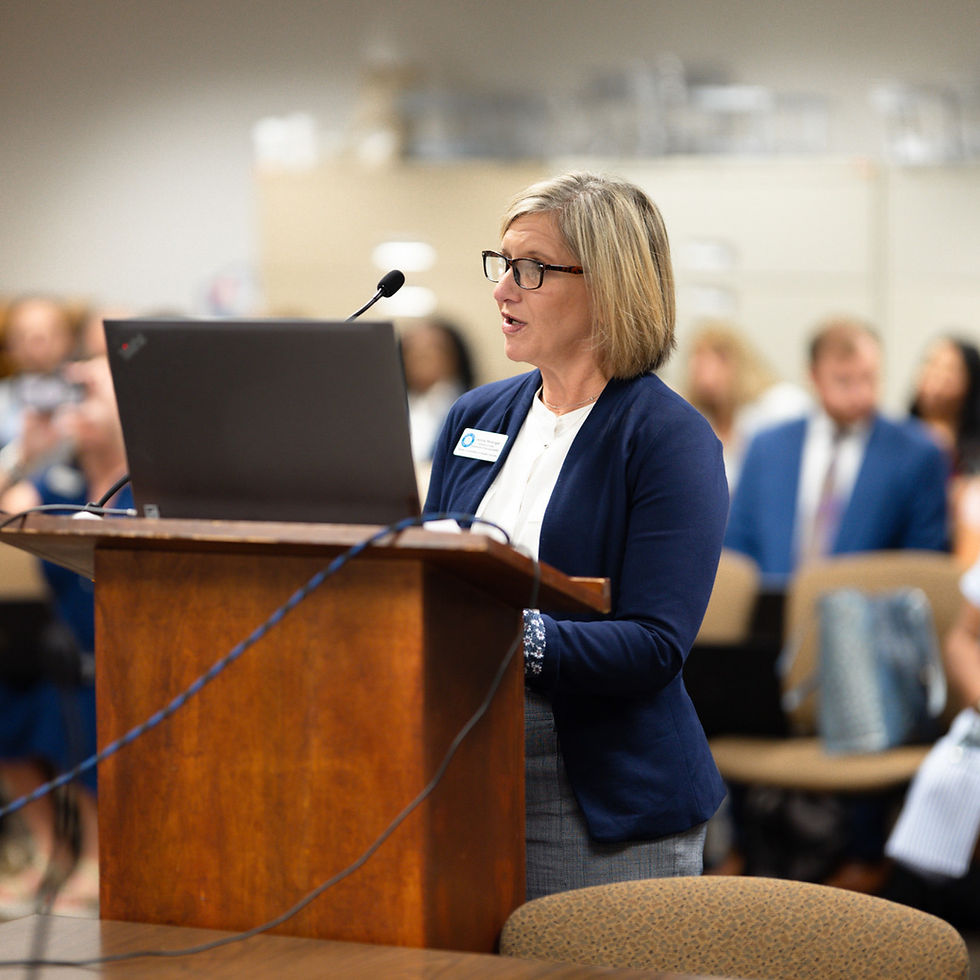
The Senate Education and Youth Committee held what was likely its final meeting before Crossover Day. The committee approved two bills and held two others.
SB 589 by Sen. Matt Brass (R-Newnan) requires schools to allow children who reach age 4 or 5 by Sept. 1 to enroll in a voluntary Pre-K program at the request of the child’s parent or guardian. The bill originally changed the registration date from Sept. 1 to Aug. 1, as Brass said many school districts begin school much earlier than Sept. 1. However, Brass asked to remove the date change due to potential issues for students born between Aug. 1 and Sept. 1. The amendment to remove the date change passed unanimously. The bill also passed unanimously and now moves to the Senate Rules Committee for consideration.
SB 445* by Sen. Greg Dolezal (R-Cumming) changes several aspects of the Georgia Promise Scholarship private school voucher program. Chris Green, president of the Georgia Student Finance Commission (GSFC), presented the changes, which are being requested by the agency.
*The substitute version of the bill considered in committee is available HERE.
The bill proposes the following changes:
Clarifies accreditation requirements for participating private schools by requiring schools in the process of becoming accredited to provide annual verification of “timely and good faith” progress toward accreditation. It also limits schools to no more than two years of participation in the voucher program while pursuing accreditation. In addition, the bill requires private schools wishing to participate in the program to submit CPA-prepared reports demonstrating fiscal soundness including a balance sheet, an income statement, and a cash flow statement.
Requires schools to report attendance, course completion, enrollment dates, funds received, and, beginning in 2030, de-identified graduation rates.
Private schools offering online instruction programs must have an office physically located in Georgia to participate in the voucher program.
Removes the State Board of Education’s authority to approve additional qualified expenses.
Lowers the required enrollment counts on which a student must attend a public school before participating in the voucher program from two enrollment counts to one.
Removes the prior-year attendance requirement for participating 1st-grade students who have not reached age 7 before Sept. 1.
Maintains the 400% federal poverty level income cap but establishes procedures for allowing higher-income students to participate, if state funds remain after accepting students living below 400% of the federal poverty level.
Students from families at or below 400% of the federal poverty level remain the top priority for receiving voucher funds, with students documented as victims of bullying and students who previously participated in the program being the next priority levels.
Establishes a lottery system if the number of students interested in participating in the program exceeds allocated state funds.
Establishes four quarterly application periods to align with the quarterly funding periods the agency uses to distribute funds to participating families.
Revises which schools are excluded from the annual lowest-performing schools list, including certain charter schools, special schools, virtual schools, schools serving primarily special populations, and schools serving only grades below third grade.
Requires annual fraud detection and prevention audits of at least 5% of accounts and authorizes corrective action and removal from the program for misuse of funds. The bill requires the Department of Audits and Accounts to conduct annual audits, with the findings incorporated into a Georgia Education Savings Authority (GESA) report.
Authorizes GESA to deduct up to 5% annually from accounts, if necessary, to cover administrative costs.
Requires proportionally greater funding reductions for higher-income students if appropriations for the program are insufficient.
Permits rollover of up to 50% of unused funds annually.
PAGE will continue to analyze the bill as it continues through the legislative process. The committee approved the bill with two dissenting votes.
SB 557 by Sen. Chuck Payne (R-Dalton) prohibits school districts from waiving statutory requirements related to student discipline or complaint policies for teachers and other school personnel. By Aug. 1, 2026, districts must adopt policies allowing a public school employee who is the victim of an act of physical violence committed by a student or a student’s parent or guardian to transfer to a similar position within the same school system, if one is available. The bill prohibits retaliation or adverse action against employees who request or receive such a transfer. SB 557 prohibits the use of student discipline data in school climate star ratings. The committee did not vote on the bill, with several committee members expressing concern about removing discipline data from school climate ratings.
PAGE signed up to testify in support of SB 557 but was not called on, likely because SB 557 was held by the committee.
The committee also heard, but did not vote, on SB 554 by Sen. Payne, which establishes a grant program to help increase the capacity of Georgia childcare facilities. Funds from the grant can be used to construct new child care learning centers or family child care learning homes; retrofit, renovate, repair, or modernize existing child care learning centers or family child care learning homes in a manner that will result in increased capacity; retrofit, renovate, repair, or modernize existing facilities for use as new child care learning centers or family child care learning homes; or provide for nonrecurring costs to increase the utilization of existing licensed child care capacity.
House Ways & Means Passes Federal Voucher Bill
The House Ways & Means Committee passed HB 1135 by Rep. Scott Hilton (R-Peachtree Corners), which would enable Georgia to participate in the federal Education Freedom Tax Credit program created by the One Big Beautiful Bill Act (OBBBA) and automatically opt Georgia into the program each year.
Senate Retirement Passes PSERS to TRS Opt-In
The Senate Retirement Committee passed SB 209, by Sen. Russ Goodman (R-Cogdell) would allow Public School Employees Retirement System (PSERS) members to irrevocably opt-in to the Teachers Retirement System (TRS). The measure has been presented as a way to help districts incentivize recruitment and retention of hard-to-fill positions.
A committee substitute of the bill made it optional for local districts to offer this PSERS-TRS opt-in to their relevant employees. The committee had significant debate over the bill. Several members suggested that instead of using state resources, local districts should establish better retirement systems for these local employees.
House Higher Ed Passed Antisemitism Bill Monday
On Monday, the House Higher Education Committee passed HB 1363 by Rep. Deborah Silcox (R-Sandy Springs), which creates a statewide coordinator position within GaDOE to handle student complaints regarding discrimination, antisemitism, or racism.
Upcoming Schedule
Wednesday, March 4 - Legislative Day 27
Thursday, March 5 - Committee Workday
Senate Education & Youth, 1 p.m., 307 CLOB
Friday, March 6 - Day 28/Crossover Day