Day 34: Absenteeism Bill Considered by House Education Committee
Several education bills moved through the legislative process on Day 34, both in committee and on the Senate floor.
The Georgia Early Literacy Act of 2026 was recommitted from the Senate Education and Youth Committee to the Senate Appropriations Committee, perhaps signaling that the proposed cost of its implementation will be closely scrutinized by budget writers.
Dual Achievement Program and Pre-K Bills Achieve Final Passage

With a vote of 53-0, the Senate passed HB 1293 by Rep. Jan Jones (R-Milton), who serves as the House Speaker Pro Tempore. The bill removes the pilot status of the Dual Achievement Program and makes changes to program entrance requirements. HB 1293 also ensures that students eligible to participate in the Dual Achievement Program in metro Atlanta districts that will not be included in a completion special school consortium will be able to continue participating in existing programs. HB 1293 now moves to the governor's desk for his signature.
The Senate also passed HB 1123, also sponsored by Rep. Jones, by a vote of 46-0. The bill would require any public school that offers after-school programs to offer them to its Pre-K students in the same manner they are offered to other students. The Department of Early Care and Learning (DECAL) would be authorized to grant annual waivers of this requirement to schools demonstrating extenuating circumstances. HB 1123 would take effect in the 2026-2027 school year. HB 1123 moves to Gov. Brian Kemp for his signature.
Absenteeism Bill Held and Dropout Recovery Charter School Bill Approved by House Education Committee
The House Education Committee considered two education bills:
SB 369 by Sen. Shawn Still (R-Norcross) would establish and define the concept of "Dropout Recovery Charter Schools," which would primarily serve students at high risk of dropping out. The bill also calls on the State Board of Education (SBOE) to develop rules and regulations governing such schools and requires the Governor's Office of Student Achievement (GOSA) to separately report on the schools' performance. SB 369 now includes language from three additional bills:
HB 1218 by Rep. Robert Flournoy (D-Hampton) allows students in grades 6-12 who attend a public virtual school full-time to participate in interscholastic and extracurricular activities in their resident school system.
HB 1206 by Rep. Todd Jones (R-South Forsyth), which would require local boards of education and other public school governing bodies to consider the total cost of ownership — including repair costs, flexibility for innovation, and anticipated resale or salvage value — when purchasing school technology devices. The bill requires local school governing authorities to submit a report to GaDOE on the total number of technology devices in use, as well as the rate and cost of their repairs. The bill applies to devices costing $100 or more and changes the reporting deadline to Oct. 15 of each year.
HB 1257 by Rep. Carmen Rice (R-Columbus) provides for charter school incentive grants for local boards of education to approve charter school petitions. The total amount of incentive grants provided under this subsection shall not exceed $2.25 million in any fiscal year. The bill also directs the State Charter Schools Commission not to act on a charter petition unless the local board of education that authorizes the charter school has voted to terminate or not renew the charter contract, or otherwise fails to renew it. Rice has framed the grant program as a targeted investment to encourage more local charter consideration throughout Georgia.
SB 369 moves on to the House Rules Committee for consideration.
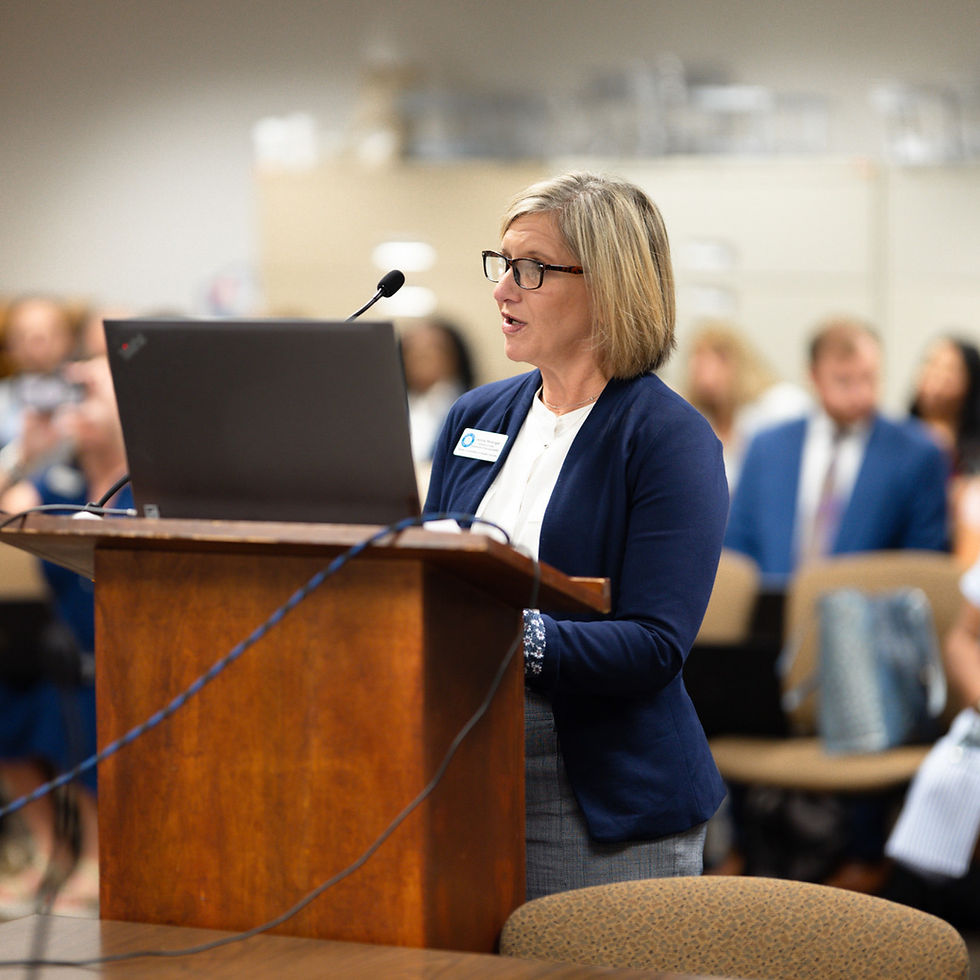
SB 513, the Every Day Counts Act by Sen. Jason Dickerson (R-Canton), seeks to codify recommendations of the Senate Study Committee on Combating Chronic Absenteeism in Schools. The bill requires local school systems to adopt a multi-tiered framework of attendance supports and interventions. A chronically-unexcused student would be defined as having five unexcused absences during the first 50 days of the school year. After the 50th school day, a chronically-unexcused student is one who misses 10% of the total number of school days. SB 513 establishes attendance review teams at the district level and, in some cases, at the school level to review cases and develop written attendance intervention plans in collaboration with chronically-unexcused students and their parents or guardians. Schools must regularly update compliance records, designate chronically-unexcused students as ineligible for extracurricular and interscholastic activities until an intervention plan is in place, and report noncompliance with the plans to the Georgia Department of Education (GaDOE). SB 513 prohibits the Department of Driver Services (DDS) from issuing an instruction permit or driver’s license to a minor under age 18 unless the student is enrolled in school or compliant with an approved attendance intervention plan. Dickerson reiterated that the bill would not impact students with an active driver’s license.
Several committee members from both parties expressed concern with the driver's license portion of SB 513. Due to the concerns, Committee Chair Chris Erwin (R-Homer) suggested committee members connect with Dickerson to address them. Erwin stated that chronic absenteeism is a real issue that needs to be addressed, but it must be done by providing schools with the tools to do so effectively. The committee did not vote on the bill. Erwin said the committee will meet next Monday and hopes to bring SB 513 back for further consideration then. He said there will be no subcommittee meetings.
Senate Education Passes Multiple House Bills, Some with Significant Changes
The Senate Committee on Education & Youth passed the following bills, all of which advance to the Senate Rules Committee:
HB 1220 by Rep. Bethany Ballard (R-Warner Robins) exempts students with an IEP, a Section 504 plan, or a diagnosis of dyslexia, autism spectrum disorder, speech language delay and disorder or other identified condition from the six-week public school attendance requirement to be eligible for a private school voucher awarded by a Student Scholarship Organization (SSO). Students whose parents are active military personnel stationed in Georgia would also be exempt from the six-week attendance requirement. The legislation includes language, suggested by PAGE, requiring participating private schools to disclose medical or behavioral conditions they accommodate.
HB 1114 by Rep. Bill Yearta (R-Sylvester) requires students in grades 9-12 to complete a course on financial literacy. This course shall include in-depth treatment of real-world scenarios and gambling risk analysis. Starting with the 2027-2028 school year, schools must also provide grade-appropriate financial literacy instruction to students in grades K-8. The committee substitute of HB 1144 also requires schools to provide grade-appropriate instruction on digital literacy to students in grades K-12 starting in the 2027-28 school year. The bill tasks the SBOE with establishing content standards for both financial and digital literacy instruction and lists certain required concepts the standards must address. GaDOE is also tasked with developing model programs to educate students on digital literacy and is authorized to provide technical support to schools for financial literacy instruction.
HB 451, by Rep. Chas Cannon (R-Moultrie), originally authorized local boards of education to provide instruction in hunting safety in grades 6-12. The committee substitute approved today removes this language and replaces it with language similar to HB 133, by Rep. David Clark (R-Buford). The bill would mandate that school districts adopt policies allowing students to be excused from school to attend release-time courses in religious moral instruction for at least one hour per week. The committee substitute was presented by Rep. Scott Hilton (R-Peachtree Corners).
Stephanie Tanner from the Georgia School Boards Association shared comments on the bill and recommended release-time policies be optional rather than mandatory. This recommendation was not adopted by the committee.
HB 634 by Rep. Carter Barrett (R-Cumming) clarifies the process for determining the award amount for students who receive a private school voucher through the Special Needs Scholarship program, which is based on their Individualized Education Plan (IEP). The bill expedites the distribution of the award and specifies the data to include in the program’s annual report, which is prepared by GOSA. HB 634 passed by committee substitute with minor changes.
Federal Tax Credit Voucher Opt-In Approved by House Committee
The House Ways and Means Committee approved SB 446 by Sen. Clint Dixon (R-Gwinnett) along party lines. The bill would enable Georgia to participate in the federal Education Freedom Tax Credit program created by the One Big Beautiful Bill Act (OBBBA) and automatically opt Georgia into the program each year. SB 446 also enables public schools to participate in the program. SB 446 advances to the House Rules Committee for consideration.
Upcoming Schedule
Friday, March 20 - Legislative Day 35
Monday, March 23 - Legislative Day 36
Tuesday, March 24 - Legislative Committee Workday
Wednesday, March 25 - Legislative Day 37
Thursday, March 26 - Legislative Committee Workday
Friday, March 27 - Legislative Day 38
Tuesday, March 31 - Legislative Day 39
Thursday, April 2 - Legislative Day 40/Sine Die