Day 21: Multiple Education Bills Pass Committee and Longtime House Leader Announces Retirement
Neither chamber considered education bills on the floor today, but this relative lull in education-related floor action is unlikely to continue as many education bills continue to pass committee.

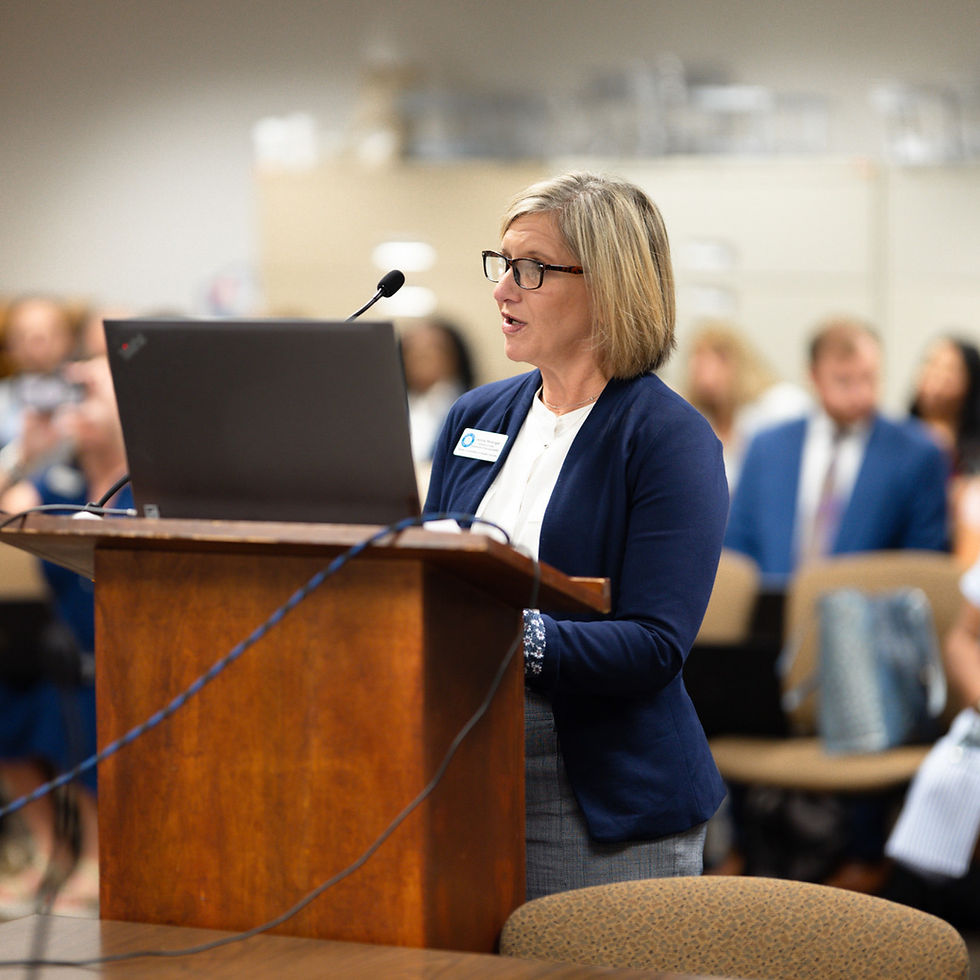
Beyond legislative action, the most notable event of the day was an announcement by longtime Speaker Pro Tempore and House Education Committee Member Jan Jones (R-Milton) that she will retire at the end of her term. Jones has served in the House for more than two decades and has held the office of Speaker Pro Tempore since 2010.
House Ed Committee Passes School District Financial Accountability, Math, Voucher, and Other Bills

House Ed passed eight bills, advancing the legislation to the House Rules Committee, which will decide when, and if, to schedule the bills for a floor vote.
HB 1164 by Rep. Will Wade (R-Dawsonville) requires the State Board of Education (SBOE) to appoint an audit committee and outline the committee's responsibilities. It revises financial audit provisions for school districts and state charter schools. The bill requires the Department of Audits and Accounts (DOAA) to create a tiered system to monitor the financial conditions of districts and state charter schools, and to institute interventions for those identified as in fiscal distress or in a critical fiscal emergency. Under HB 1164, the Governor's Office of Student Achievement (GOSA) has expanded authority to conduct performance audits of school districts, including districts' use of waivers. Wade, a Floor Leader for Gov. Brian Kemp, introduced a new version of the bill with several small changes related to the State Charter Schools Commission.
HB 1220 by Rep. Bethany Ballard (R-Warner Robins) exempts students with an IEP, a Section 504 plan, or a diagnosis of dyslexia, autism spectrum disorder, speech language delay and disorder or other identified condition from the requirement to attend a public school for six weeks to be eligible for a private school voucher awarded by a Student Scholarship Organization (SSO). Students whose parents are active military personnel stationed in Georgia would also be exempt from the six-week attendance requirement. Ballard introduced an updated version of the legislation with a change suggested by PAGE requiring participating private schools to disclose medical or behavioral conditions they accommodate.
HB 634 by Rep. Carter Barrett (R-Cumming) clarifies the process for determining the award amount for students who receive a private school voucher through the Special Needs Scholarship program, which is based on their Individualized Education Plan (IEP). The bill also expedites the distribution of the award and specifies the data to include in the program’s annual report, prepared by GOSA.
HB 1123 by Speaker Pro Tem Jones, would require any public school that offers after-school programs to offer them to its Pre-K students in the same manner they are offered to other students. The Department of Early Care and Learning (DECAL) would be authorized to grant annual waivers of this requirement to schools demonstrating extenuating circumstances. The bill would take effect in the 2026-2027 school year.
HB 1259 by Rep. Matt Dubnik (R-Gainesville) would prohibit local school systems that fail to maintain an average College and Career Ready Performance Index (CCRPI) score of 70 over the last two school years from providing virtual instruction to out-of-district students. The bill also requires school systems to compile a list of out-of-district students enrolled as of Oct. 1 and March 1 of each year. Finally, HB 1259 excludes out-of-district virtual students from equalization funding calculations.
HB 1218 by Rep. Robert Flournoy (D-Hampton) allows students in grades 6-12 who attend a public virtual school full-time to participate in interscholastic and extracurricular activities in their resident school system.
HB 1030 by Rep. Sandy Donatucci (R-Buford), the “Math Matters Act,” makes several significant changes to math instruction in Georgia, including requiring the adoption of new math standards, increasing required instructional time, automatically enrolling certain high-performing students in advanced math courses, and imposing new requirements for educator certification. Bill provisions would not be waivable by schools. HB 1030 also requires GaDOE to report various data on student math assessment performance and the number of students enrolled in advanced math courses.
HB 1107 by Rep. Carmen Rice (R-Columbus), the “Excellent Teacher Preparation Act,” would require the GaPSC to develop and annually report comprehensive performance measures for all educator preparation providers (EPPs) in the state. The performance measures would focus on the preparedness and performance of EPP graduates and individuals who complete the initial preparation program in certain fields. The bill outlines various metrics, including first-and best-attempt exam passage rates, job placement rates, graduate retention rates, and evaluation scores from EPP graduates, which will be included in these performance measures.
Financial Accountability Bill and Chronic Absenteeism Bills Approved by Senate Ed Committee
The Senate Education & Youth Committee resumed discussion of SB 472, by Committee Chair Billy Hickman (R-Statesboro), which the committee first considered Tuesday. The bill was amended to remove a provision already included in HB 1164, currently being considered by the House.
Sen. Ed Setzler (R-Acworth) amended the bill to limit the length of contracts for superintendents of districts designated as high-risk by the Department of Audits and Accounts (DOAA) to one year. If the superintendent's contract is currently longer than one year, it will be considered void. Any new contract for the superintendent of a high-risk district must not be the subject of a finding by the state auditor for financial mismanagement or misconduct, and the superintendent must not knowingly fail to comply with a corrective action plan assigned under the provisions of the bill. If the superintendent violates the stipulations, the local board is authorized to terminate the superintendent's contract. The amendment passed unanimously, as did the bill. The substitute version of the bill presented in committee is available HERE.
The committee also unanimously approved SB 513, the Every Day Counts Act, by Sen. Jason Dickerson (R-Canton). Dickerson said the bill codifies some recommendations from the Senate Study Committee on Combating Chronic Absenteeism in Schools, created and chaired by former Sen. John F. Kennedy (R-Macon), who left the Senate to run for Lieutenant Governor. The bill requires local school systems to adopt a multi-tiered framework of attendance supports and interventions. The bill defines a chronically unexcused student as a student with five unexcused absences during the first 50 days of the school year. After the 50th school day, a chronically unexcused student is one who has missed 10% of the total number of school days to date. The bill requires attendance review teams to be established at the district level and, in certain cases, at the school level to meet at least monthly to review cases and develop written attendance intervention plans in collaboration with students deemed chronically unexcused and their parents or guardians. Systems must regularly update compliance records, designate chronically unexcused students as ineligible for extracurricular and interscholastic activities until an intervention plan is in place, and report noncompliance with the plans to the Georgia Department of Education (GaDOE). The bill prohibits the Department of Driver Services (DDS) from issuing an instruction permit or driver’s license to a minor under age 18 unless the student is enrolled in school or compliant with an approved attendance intervention plan. During public testimony, several DeKalb County high school students shared concerns regarding the driver's license provisions.
Public School Tax Credit Increases Passes Subcommittee

The House Ways & Means Income Tax Subcommittee passed HB 565 by Rep. Rick Townsend (R-Brunswick). The bill would increase the cap on the PEACH Education Tax Credit from $15 million to $25 million. PAGE Legislative Communications Specialist Robert Aycock spoke in support of the bill and the tax credit as a way to provide continued financial support for public schools.
The bill now awaits consideration by the House Ways and Means Committee.
Upcoming Schedule

Friday, Feb. 20 - Legislative Day 22
Monday, Feb. 23 - Committee Workday