Day 15: Multiple PAGE Priorities Advance, Including Senate Return-to-Work, Student Teacher Grants, & Literacy Coaches, as Part of 2026 Literacy Act
Monday saw multiple positive developments regarding education legislation. PAGE-supported initiatives passed with bipartisan support on the Senate floor and in committees.
Literacy Act of 2026 Passes Subcommittee, Submit Feedback Now


The Georgia Early Literacy Act of 2026, HB 1193,* sponsored on behalf of House Speaker Jon Burns (R-Newington) by House Education Chair Chris Erwin (R-Homer), was unanimously approved by the House Education Subcommittee on Curriculum and Academic Achievement. the Act is expected to be considered by the full House Education Committee Feb. 12, which could mean that it is scheduled for a vote on the House floor next week.
When presenting the legislation today, Erwin framed grade-level reading as an imperative owed to all students. More than half of Georgia students are not reading on grade level. He highlighted several HB 1193 measures, including:
Qualified literacy coaches in all K-3 schools. Schools with fewer than 200 students would receive funding for half of a coach. House leaders estimate ~1,500 literacy-coach-eligible Georgia elementary schools with grades K,1, 2, or 3. If a district divides elementary schools into K-2 and 3-5, each school would earn a literacy coach, and the literacy coach at the upper elementary could also assist grades 4-5
Regional Education Service Agencies (RESAs) would have two types of regional coaches. Regional literacy coaches would support school-based literacy coaches. Regional literacy leadership coaches would support principals.
Family encouragement to start kindergarten, though the age of compulsory attendance would be unchanged by HB 1193
Creation of the Georgia Literacy Task Force that will select the High-Quality Instructional Materials (HQIM), comprehensive educator professional learning, and universal reading screeners
Required school district adoption of a unified literacy plan
Public awareness campaign on the importance of literacy
Erwin pointed to the legislation's minimum qualifications for local and regional literacy coaches (lines 801-909). The bill also specifies some duties that coaches are prohibited from doing.

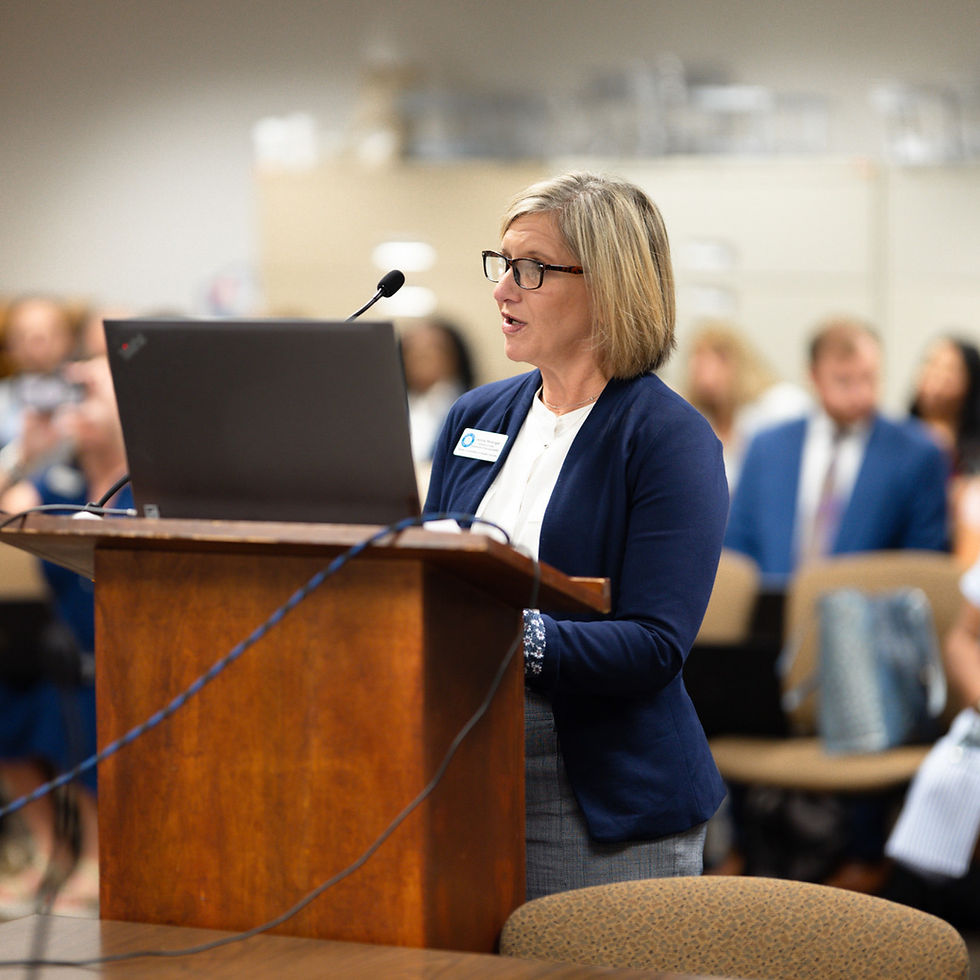
During public comment, PAGE Director of Legislative Affairs Margaret Ciccarelli thanked legislators and appropriators for prioritizing high-quality literacy coaches. She cited fall 2024 PAGE survey data indicating educators support literacy initiatives but desire more coaching on successfully incorporating literacy training in their classrooms. Ciccarelli mentioned that PAGE would collect and share educator feedback on HB 1193.
The PAGE HB 1193 educator feedback collector is available HERE. Anonymous and non-anonymous responses will be recorded and shared with policymakers.
PAGE's understanding of the Literacy Act continues to evolve. We have created a bill summary available HERE.
Review a Capitol Beat media report on today's hearing HERE.
*Please note that as of the publication of this report, the version of HB 1193 available on the state website has not been updated to reflect the newest version of the bill, committee substitute LC 49 2629S.
.
Senate Passes SB 150, Educator Return to Work Bill

With only one dissenting vote, the Senate passed SB 150*, which seeks to reauthorize Georgia’s educator return-to-work (RtW) program until 2034. The PAGE-supported legislation, sponsored by Sen. Billy Hickman (R-Statesboro) would allow educators with 25 years of creditable service to return to full-time work, after a 12-month waiting period, and draw retirement benefits while teaching in qualified positions, including English language arts (as long as the teacher holds a current dyslexia or reading endorsement approved by the Professional Standards Commission), science, social studies, special education, CTAE, and math.
Georgia's current RtW program, which will expire this year unless it is reauthorized, requires eligible educators to have at least 30 years of service and return in the top three areas of highest need as determined by their district's RESA.
Hickman's presentation of the legislation on the Senate floor was followed by a brief comment from Sen. Blake Tillery (R-Vidalia), who emphasized that he supports RtW and SB 150 but hopes the program will be evaluated to ensure it does not incentivize early educator retirement. Tillery also referenced 3% annual TRS Cost of Living Adjustments (COLAs) and noted that state employees participating in the Employees Retirement System (ERS) do not receive automatic COLAs.
SB 150 now moves to the House for consideration.
*Reminder: Educators should not base retirement decisions on pending legislation. SB 150 does not reduce the years of service required to receive full retirement benefits. If passed, it would reduce the service requirement for RtW participation.
Student Teacher Grants Legislation Unanimously Approved
In addition to approving the Literacy Act, the House Education Subcommittee on Curriculum and Academic Achievement also unanimously passed another important bill that moves to the full Education Committee.
HB 310, the Student Teacher Promotion Act, by Rep. Phil Olaleye (D-Atlanta) would create a needs-based student teacher stipend program for up to 500 student teachers who are eligible to receive the Pell Grant. Participating student teachers would receive up to $5,000 to help offset costs of student teaching, including travel, supplies, clothing, and opportunity costs due to less time for paid employment. Additionally, they would be eligible to receive a $2,500 incentive to sign a teaching contract and work in Georgia schools.

PAGE Legislative Communications Specialist Rob Aycock spoke in strong support of HB 310, citing PAGE survey data and a fall PAGE listening session with student teachers at the Georgia State University College of Education with Rep. Olaleye.

During the discussion, subcommittee members expressed support for the measure. During that commentary, House Speaker Pro Tempore Jan Jones (R-Milton) suggested HB 310 is more likely to receive funding if it more closely aligns with high-needs subject areas in Georgia schools.
Rep. Olaleye indicated he is open to refining the bill, which is likely to occur before the Student Teacher Promotion Act is heard in full committee.
Register for PAGE Day on Capitol Hill Feb. 17


Please make your plans to join us for 2026 PAGE Day on Capitol Hill, in partnership with the Georgia Association of Educational Leaders (GAEL) and the Georgia Association of Colleges for Teacher Education (GACTE).
This free event will include breakfast, lunch, information sessions with key education-focused policymakers, advocacy opportunities under the Gold Dome, and a state school superintendent candidate forum.
Register and watch a brief informational video HERE.
Upcoming Schedule
Tuesday, February 10, Legislative Day 16
2 p.m. Senate Ed, 307 CLOB
2 p.m. House Retirement, 406 CLOB
Wednesday, February 11, Legislative Day 17
7 a.m. Senate Appropriations Higher Ed and Education Subcommittee, 307 CLOB
Thursday, February 12, Legislative Day 18
Tuesday, February 17, Legislative Day 19 - PAGE Day on Capitol Hill