Day 11: Senate Return to Work Bill Unanimously Approved by Committee
Senate committee meetings were postponed today as the Senate engaged in a lengthy debate on SB 382, which changes property taxes collected by county governments, including school boards. Once the Senate floor session concluded, several major education bills, including SB 150, which would expand and reauthorize the return-to-work program for retired educators, were approved in committee. The House had a short floor calendar, with no education bills on the agenda, and no education bills included on committee agendas.
In our Day 10 Capitol Report, PAGE reported on HB 907, which makes changes to completion special schools. The bill provided to the PAGE legislative team at the meeting was not the correct version. The Day 10 report has been updated with a description of the latest substitute version approved in subcommittee.
PAGE-Supported Return to Work Bill Unanimously Approved by Retirement Committee

The Senate Retirement Committee passed SB 150, which seeks to reauthorize Georgia’s educator return-to-work (RtW) program until 2034. The legislation would allow educators with 25 years of creditable service to return to full-time work, after a 12-month waiting period, and draw retirement benefits while teaching in qualified positions, including English language arts (as long as the teacher holds a current dyslexia or reading endorsement approved by the Professional Standards Commission), science, social studies, special ed, CTAE, and math.
Georgia's current RtW program, which will expire this year unless it is reauthorized, requires eligible educators to have at least 30 years of service and return in the top three areas of highest need as determined by their local Regional Education Service Agency (RESA).
When presenting the bill in committee, bill sponsor Billy Hickman (R-Statesboro) referenced an early version of SB 150 on which a fiscal study was performed. He reported that the cost of the first version of SB 150 was prohibitive, so he amended the legislation to require qualifying teachers to wait 12 months before they return under the RtW program. He noted that during the required 12-month waiting period, teachers can work up to 49%.
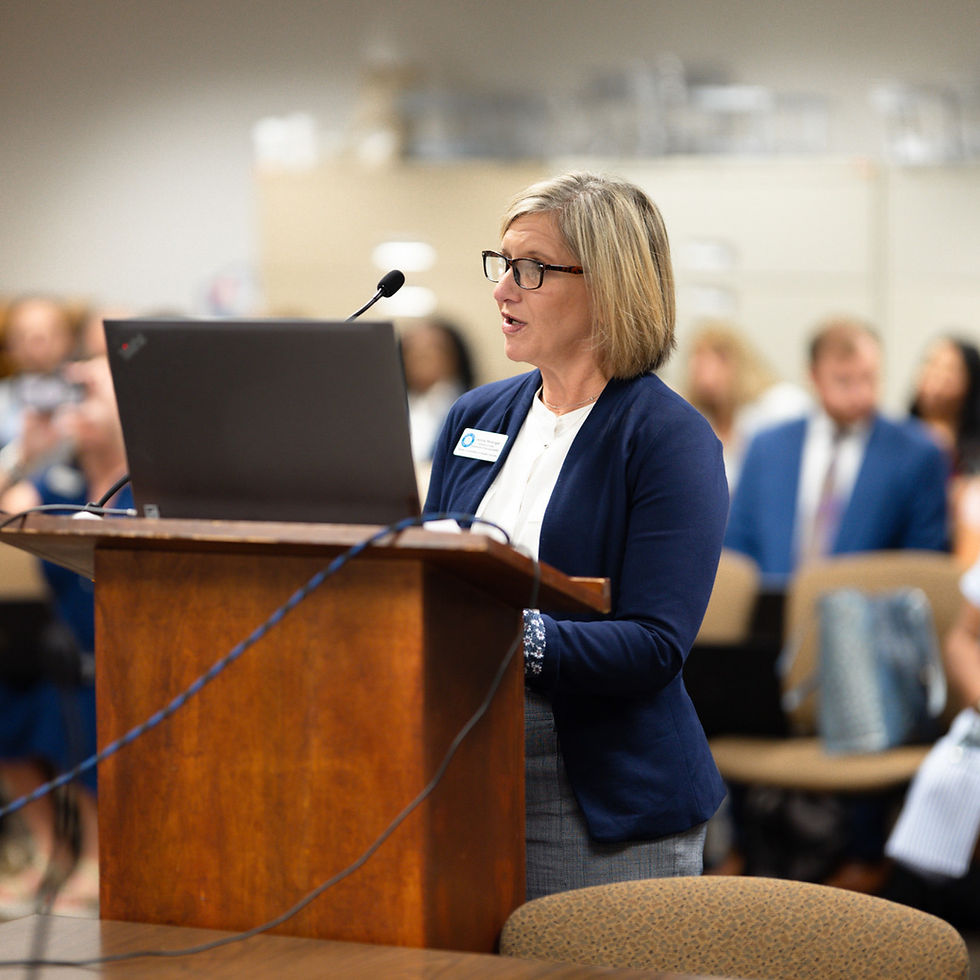
As time was running short, the chair did not call PAGE to testify in support of the bill but allowed those who signed up to provide formal comment, including PAGE, the Georgia School Boards Association, and State School Superintendent Richard Woods, to quickly voice support. SB 150 passed unanimously and now moves to Senate Rules, which will decide when to schedule the bill for a floor vote.
*Reminder: Educators should not base retirement decisions on pending legislation. SB 150 does not reduce the years of service required to receive full retirement benefits. If passed, it would reduce the service requirement for RtW participation.
Harmful Materials Bill Passes House Subcommittee
After lengthy testimony from supporters and opponents, the Hong Subcommittee of House Judiciary Non-Civil passed SB 74 by Sen. Max Burns (R-Sylvania), which would subject librarians to criminal prosecution for knowingly distributing harmful materials to minors. The offense would not apply if the librarian did not know the harmful material existed or if they had recommended or suggested that the harmful material be subject to review or removal or that it be assigned to a different location or permission level.
PAGE Legislative Communications Specialist Robert Aycock testified on the bill, addressing various concerns. He suggested SB 74 be further narrowed so as to only apply to librarians who failed to adhere to established material review and removal processes.
An amendment to that effect was offered by Rep. Esther Panitch (D-Sandy Springs) but was voted down on party lines. Another party-line vote moved SB 74 onto the full House Judiciary Non-Civil Committee.
Advanced Mathematics Pathway Proposal Progresses
The Senate Education & Youth Committee approved SB 171, authored by Sen. Jason Anavitarte (R-Dallas) and presented by Sen. Max Burns (R-Sylvania). The bill would require the State Board of Education (SBOE) to develop an advanced math pathway for students in grades 3 to 8, culminating in a high school math course that students could take in middle school. Burns noted that many districts already offer advanced math classes, and the bill aims to ensure that all students have access to them. Under SB 171, districts would be required to offer the math classes in grades 6 to 8. The bill would also require the SBOE to establish criteria for students to be automatically enrolled in the advanced classes, offer an opt-out for students whose parents/guardians do not want them to take the classes, and provide on report on pathway participation.
Committee members amended the bill to allow students who are not automatically eligible for advanced classes to enroll in them upon the request of parents or guardians, and to require the SBOE to develop the math pathway by January 1, 2027.
The bill now goes to the Senate Rules Committee, which will determine if it moves to a full Senate vote.
Expedited Foster Care Student Enrollment Approved by Senate Committee
The Senate Children and Families Committee approved SB 431 by Sen. Kay Kirkpatrick (R-Marietta), who is also the committee chair. The bill requires a receiving school to enroll foster care students who transfer to the school within two days. The legislation also prohibits assigning foster care students to remote learning due to missing records. If a school fails to comply, the principal or their designee must provide the parent or guardian with contact information for the appropriate RESA student affairs officer and the Georgia Department of Education’s (GaDOE) chief privacy officer (CPO). GaDOE could also require the school to implement a corrective action plan upon the request of the RESA student affairs officer or the CPO. During her presentation, Kirkpatrick said the change stems from a recommendation by the Senate Study Committee on Additional Services and Resources for Transition Age Youth in Foster Care, which met last year. The final report of the study committee is available HERE.
Sen. Sally Harrell (D-Atlanta) asked if this change interferes with timelines in HB 268, an expansive school safety bill approved in 2025, which requires student records to be transferred to a receiving school within three days. She expressed concern that allowing foster care students to be enrolled before the records arrive could create a circumstance where the school does not know enough about the student before enrolling, one of the issues leading to the Apalachee High School shooting in Barrow County in 2024. Kirkpatrick responded that foster care children are in the custody of the state and face unique challenges that require them to be enrolled in a school as soon as possible. The bill was approved unanimously and moves to the Senate Rules Committee for consideration by the full Senate.
Register for PAGE Day on Capitol Hill Feb. 17


Please make your plans to join us for 2026 PAGE Day on Capitol Hill, in partnership with the Georgia Association of Educational Leaders (GAEL) and the Georgia Association of Colleges for Teacher Education (GACTE).
This free event will include breakfast, lunch, information sessions with key education-focused policymakers, advocacy opportunities under the Gold Dome, and a state school superintendent candidate forum.
Register and watch a brief informational video HERE.
Upcoming Schedule
Wednesday, Feb. 4 - Legislative Day 12
7 a.m. House Appropriations, 341 CAP
Thursday, Feb. 5 - Legislative Day 13
1 p.m., Senate Education and Youth Committee, 307 CLOB
1 p.m. House Education, 506 CLOB
Friday, Feb. 6 - Legislative Day 14